
Import problems after delivery: 7 Critical Risks
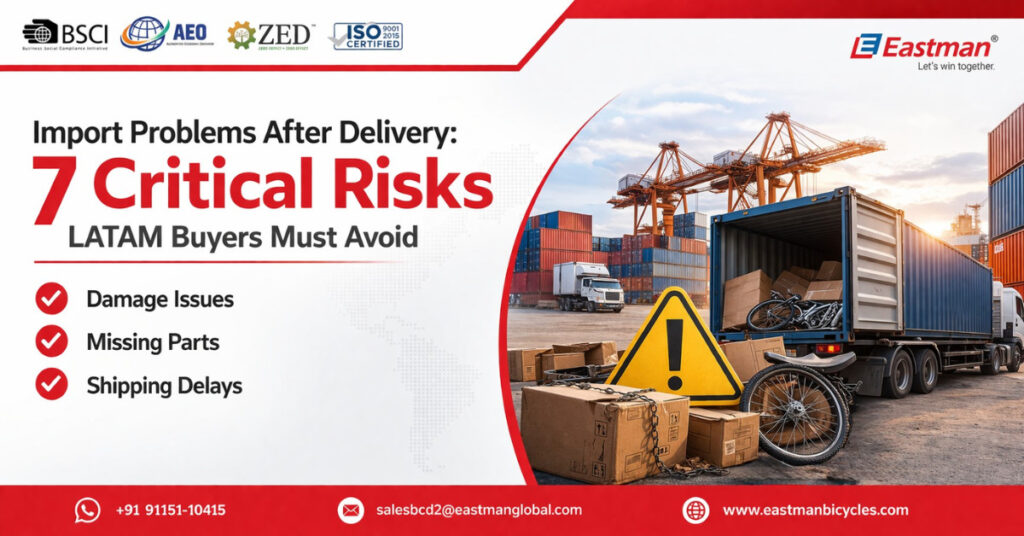
1. A Shipment That Looked Perfect… Until It Didn’t The container arrived at the port in Chile—on paper, everything was perfect. Invoices matched. Packing lists were clean. The supplier confirmed dispatch weeks ago. But when the distributor opened the container, reality hit hard: What started as a profitable import quickly turned into import problems after delivery—costing time, money, and trust. For many Latin American importers, this isn’t a rare event. It’s a recurring operational risk. 2. The Hidden Problem Behind Bicycle Imports Most importers focus heavily on price and shipping timelines. But the real risk lies after the shipment arrives. Common issues include: In regions like Mexico, Chile, and Colombia, these issues are amplified by: Longer transit times increase the probability of handling damage, moisture exposure, and documentation errors. 3. Why These Issues Keep Happening in Latin America The root causes are rarely accidental. They are systemic. 1. Port Congestion & Handling Risks Latin American ports often face congestion, increasing container handling frequency—raising damage probability. 2. Extended Transit Time Typical transit time India to LATAM ranges from 35 to 60 days. For Chile specifically: Long durations increase exposure to: 3. Supplier Inconsistency Not all suppliers maintain strict QC protocols across bulk orders. What you approved in samples may not match final shipment consistency. 4. Real Case: India → Chile Shipment Breakdown A mid-sized importer in Chile ordered mixed bicycle components: Shipment timeline: Problems faced: Despite pre-shipment approval, post shipment quality issues created: This is a textbook example of poor import risk management bicycle strategy. 5. How to Prevent Post-Shipment Problems To reduce import problems after delivery, you need structured control—not just trust. 1. Enforce Multi-Level Quality Checks 2. Demand Export-Grade Packaging 3. Use Clear Packing Standardization Avoid missing parts shipment import by: 4. Align Logistics with Product Sensitivity Not all bicycle parts are equal: 5. Build Supplier Accountability Work only with exporters who: 6. Exporter Insight from the Ground Experienced exporters understand that shipment success isn’t defined at dispatch—but at delivery. Companies like Eastman Industries Limited bring structured export systems developed over 50+ years of global trade. With exports across multiple continents, such manufacturers focus on: This level of discipline significantly reduces bicycle shipment damage issues and post-delivery surprises. 7. Why This Matters for Your Margins Every unresolved issue after delivery impacts: Even a 5–10% defect or shortage rate can eliminate your entire margin. For LATAM importers, where logistics costs are already high, poor import risk management bicycle can turn profitable deals into losses. 8. Conclusion In international bicycle trade, the biggest risks are not in negotiation—but in execution. import problems after delivery are predictable—and preventable. The difference lies in: If you treat post-shipment risk as a strategic priority, not an afterthought, you protect both your margins and your market credibility. FAQs: Frequently Asked Questions What causes import problems after delivery? Common causes include poor packaging, inconsistent quality control, and long transit times that expose goods to damage. ¿Por qué hay retrasos en envíos a Latinoamérica? Debido a congestión portuaria, procesos aduaneros y rutas logísticas largas desde Asia. How to avoid bicycle shipment damage issues? Use reinforced packaging, moisture protection, and conduct multi-stage quality inspections before dispatch. ¿Qué hacer si faltan piezas en un envío? Revisar listas de empaque detalladas y trabajar con proveedores que usen sistemas de trazabilidad por SKU. What is the transit time India to LATAM? Typically between 35 to 60 days depending on destination and shipping route.
Export Documents Bicycle Shipment: 7 Critical Mistakes
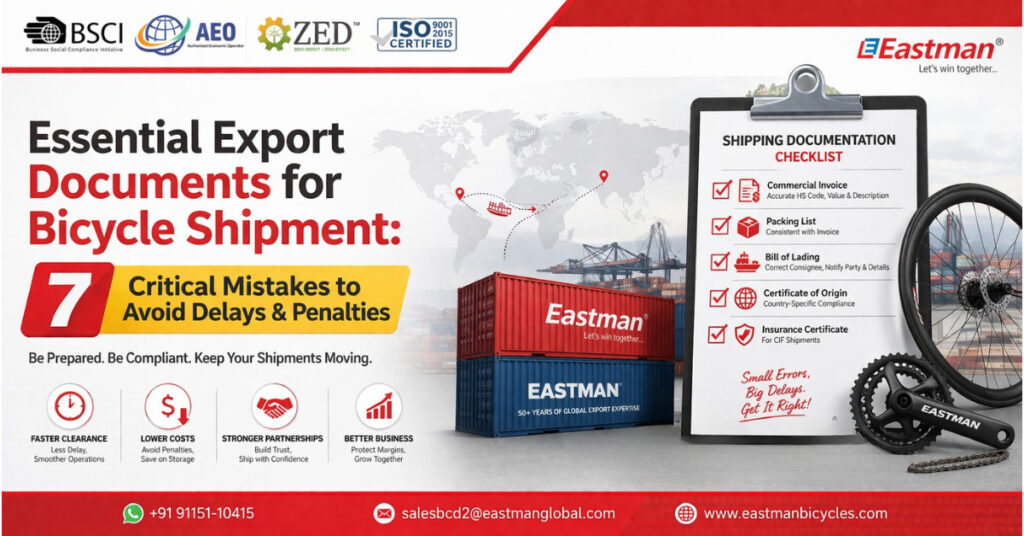
Hook: When One Document Delays an Entire Shipment In late Q3, a distributor in Chile was expecting a container of bicycle parts—frames, pedals, and accessories—from India. Everything was on schedule. The vessel arrived on time. But the cargo didn’t move. Why? A minor bill of lading error—just a mismatch in consignee details. The result? For LATAM buyers, this isn’t rare—it’s operational risk. And most of the time, the issue is not logistics. It’s export documents bicycle shipment errors. The Growing Problem of Shipping Delays in Latin America If you’re importing into Mexico, Chile, Colombia, or Peru, you’ve already faced: According to the World Bank, Latin America consistently ranks lower in logistics performance compared to Asia and Europe. Even a perfectly shipped container can get stuck due to incomplete or incorrect paperwork. Root Causes Behind Export Documentation Errors Let’s break down the most common reasons behind import export paperwork mistakes: 1. Inconsistent Documentation Across Files Mismatch between: Even small inconsistencies trigger customs inspections. 2. Bill of Lading Errors A critical issue in bicycle shipments: These bill of lading errors can stop clearance completely. 3. Poor Understanding of LATAM Customs Requirements Each country has different compliance rules: 4. Lack of Standardized Shipping Documentation Checklist Many suppliers still rely on manual processes—leading to missing or outdated paperwork. Real Scenario: India to Chile Shipment Breakdown Let’s consider a typical shipment: Expected Timeline: But in reality: A missing HS code clarification caused customs to hold the shipment. Actual Outcome: This directly impacts planning for retailers relying on tiempo envío India Chile consistency. Solutions: A Practical Shipping Documentation Checklist To avoid costly delays, here’s a shipping documentation checklist every LATAM importer should demand: Mandatory Export Documents: Best Practices: Exporter Insight: What Experienced Suppliers Do Differently Established exporters like Eastman Industries Limited follow a fundamentally different approach: This is why experienced exporters rarely face customs clearance bicycle export delays. The difference isn’t just manufacturing—it’s process discipline. Product Integration: Why This Matters for Bicycle Components Whether you’re importing: Even a small documentation issue can delay entire SKUs, affecting: Documentation accuracy becomes as critical as product quality. Why Documentation Accuracy Directly Impacts Your Margins Let’s quantify the risk: Issue Impact Documentation error 7–15 days delay Port storage charges +$50–$150/day Lost sales window High seasonal loss Additionally, UN trade reports show that inefficient trade documentation increases total landed cost significantly. For LATAM buyers, this means: Your real cost is not just product price—it’s reliability. Conclusion In global bicycle trade, delays are not always caused by distance—they’re caused by documentation gaps. For LATAM importers, the smartest move is not just negotiating better prices—but working with exporters who understand: Because in the end: The shipment that clears fastest is the one that’s documented best. FAQs: Frequently Asked Questions 1. What causes shipping delays in Latin America? Delays are usually caused by customs clearance issues, port congestion, and incorrect documentation rather than shipping time itself. 2. ¿Por qué hay retrasos en envíos a Latinoamérica? Principalmente por errores en documentos, inspecciones aduaneras y congestión portuaria en países como Chile y Brasil. 3. What are common bill of lading errors in bicycle shipments? Incorrect consignee details, wrong HS codes, and missing notify party information are the most common issues. 4. ¿Qué documentos se necesitan para exportar bicicletas? Factura comercial, lista de empaque, conocimiento de embarque, certificado de origen y seguro (si aplica). 5. How to avoid customs clearance delays in bicycle export? Use a standardized checklist, verify documents before shipment, and work with experienced exporters.
First Import Order Checklist: 7 Proven Mistakes to Avoid
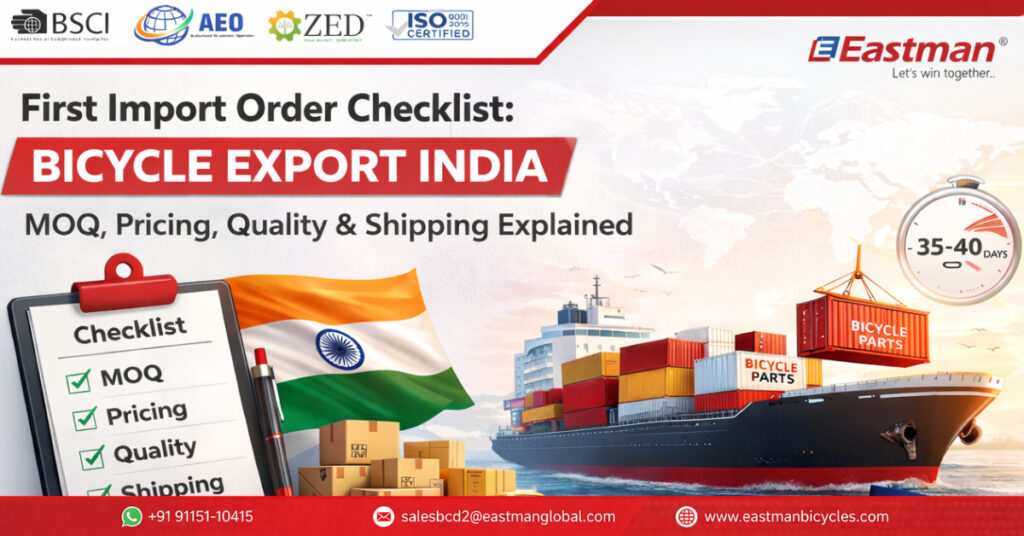
Hook: The First Import That Went Wrong It started like many first deals. A distributor in Chile placed his first import order checklist bicycle export India—excited about margins, confident in pricing, and eager to scale. But 60 days later, reality hit. The shipment was delayed. Costs increased. Payment terms created pressure. And the supplier? Not as reliable as expected. This is the hidden risk behind every first import order checklist bicycle export India—especially for LATAM buyers navigating global sourcing for the first time. The Real Problem: Delays & Cost Surprises If you’re importing into Latin America, you already know the pain points: These delays don’t just slow shipments—they disrupt dealer networks, cash flow, and customer trust. According to the(World Bank Logistics Performance Index),LATAM countries still face infrastructure and customs efficiency gaps compared to Asia. Root Causes Behind LATAM Import Issues 1. Logistics Bottlenecks Port congestion in Santos (Brazil), Manzanillo (Mexico), or Callao (Peru) often extends lead times unpredictably. 2. Supplier Inconsistency New buyers often choose suppliers based only on price—not reliability. 3. Lack of MOQ Clarity Misunderstanding MOQ bicycle export India leads to: 4. Payment Term Confusion Poorly structured supplier terms and payment import agreements can lock your capital unnecessarily. Real Scenario: India → Chile Shipment Breakdown A real-world example: Expected: Actual: Why? The importer had no buffer planning—and paid the price in delayed distribution. First Import Order Checklist (Actionable Guide) Here is a practical first import order checklist bicycle export India you should follow: 1. Confirm MOQ Before Negotiation Understand: 2. Lock Pricing Structure Clarify: 3. Define Quality Standards Always request: 4. Negotiate Payment Terms Smartly Best practices: 5. Plan Logistics Realistically Factor: 6. Build Buffer Time Add: Exporter Insight: What Experienced Suppliers Do Differently Companies like Eastman Industries Limited bring a different approach. With over 50 years of export experience: This is not about selling—it’s about reducing uncertainty for importers. Where Bicycle Parts Fit Into This Strategy For LATAM buyers sourcing: The key is consistency. A strong bicycle sourcing checklist ensures: Without this, scaling your distribution becomes risky. Why This Matters for Your Margins Every delay or mistake impacts: Even a 15-day delay can: inefficiencies in global trade logistics can reduce profitability by up to 20% in developing regions. Conclusion Your first import defines your long-term success. A structured first import order checklist bicycle export India is not optional—it’s your risk management tool. For LATAM buyers, the difference between profit and loss often comes down to: Import smart—not just cheap. FAQs: Frequently Asked Questions What causes shipping delays in Latin America? Port congestion, customs inefficiencies, and limited infrastructure are key reasons behind shipping delays Latin America. ¿Por qué hay retrasos en envíos a Latinoamérica? Los retrasos ocurren por congestión portuaria, procesos aduaneros lentos y limitaciones logísticas en la región. What is the average transit time from India to LATAM? Typical transit time India to LATAM ranges between 30–45 days but can extend to 60+ days during peak seasons. ¿Cuál es el tiempo envío India Chile? El tiempo envío India Chile suele ser de 35–50 días, dependiendo del puerto y condiciones logísticas. What is MOQ in bicycle export from India? MOQ bicycle export India refers to the minimum quantity required per product or order, often optimized for container shipping.
Cheap vs quality suppliers bicycle: What LATAM Importers Must Know Before Ordering
Table of Contents 1. A Shipment That Changed Everything A distributor in Chile once chose a low-cost supplier to improve margins. The numbers looked perfect on paper. But within 60 days, problems surfaced—defective pedals, inconsistent finishing, and delayed shipments. What started as a cost-saving decision turned into a reputational risk. This is where the debate of cheap vs quality suppliers bicycle becomes real—not theoretical. 2. The Real Problem Behind Supplier Decisions Across Mexico, Peru, and Colombia, importers face a constant balancing act: Add to that shipping delays Latin America and frequent retrasos envíos Latinoamérica, and the cost equation changes entirely. What looks cheap upfront often becomes expensive later. 3. Why Cheap vs Quality Suppliers Bicycle Choices Go Wrong Hidden Risks Behind Low Price Suppliers Many LATAM buyers focus on unit price—but overlook: These factors directly affect bicycle import quality issues. Logistics Compounds the Problem Even if the price is low: According to global logistics benchmarks, inefficiencies in supply chains can significantly increase total landed cost. 4. Real Scenario: India to Chile Shipment Breakdown A mid-sized importer switched from a cheaper supplier to a structured exporter. Before: After switching: The key difference? Not just price—but process. 5. How to Choose Cheap vs Quality Suppliers Bicycle Without Risk 1. Evaluate Total Cost, Not Unit Price Factor in delays, defects, and replacements. 2. Check Certifications & Standards Reliable suppliers follow international quality norms. 3. Assess Logistics Capability Can they manage transit time India to LATAM efficiently? 4. Look for LATAM Experience Suppliers familiar with Chile, Peru, or Brazil reduce risk. 5. Demand Consistency, Not Just Samples One good sample doesn’t guarantee bulk quality. 6. Exporter Insight: What 50+ Years of Trade Teaches Companies like Eastman Industries Limited have seen this pattern repeatedly. With over five decades of export experience: Global trade data also supports this—structured supply chains outperform low-cost fragmented sourcing. 7. Where Product Quality Meets Logistics When sourcing bicycle components: A reliable supplier ensures: 8. Why It Matters for LATAM Importers Choosing the wrong supplier affects: In Latin America, timing is everything. A delayed or defective shipment doesn’t just hurt margins—it opens doors for competitors. 9. Conclusion: The Real Cost of Cheap The decision between cheap vs quality suppliers bicycle is not about spending more. It’s about avoiding hidden losses. For LATAM importers, success comes from: Because in global trade, the cheapest supplier is rarely the most profitable. Image Placeholders FAQ Section 1. What is the risk of choosing cheap bicycle suppliers? Low-cost suppliers often lead to inconsistent quality, delays, and higher long-term costs. 2. ¿Qué problemas causan los proveedores baratos de bicicletas? Generan retrasos, defectos de calidad y problemas logísticos que afectan el negocio. 3. What is the typical transit time India to LATAM? Usually 35–60 days depending on route and port conditions. 4. ¿Cuál es el tiempo envío India Chile promedio? Entre 40 y 55 días, dependiendo de la logística y congestión portuaria. 5. How to compare bicycle suppliers India vs China? Evaluate quality consistency, logistics support, certifications, and communication—not just price.
Bicycle Shipping Time from India to Latin America: Complete Import Guide (2026)
A Story Most Importers Don’t Expect A distributor in Mexico once told us: “We planned everything. Pricing, marketing, even dealer rollout.Shipping was 45 days — we thought that was safe.” It wasn’t. The container arrived late.Inventory ran out.Competitors filled the gap. And suddenly, shipping time mattered more than price ever did. 2. The Real Problem LATAM Importers Face If you’re importing from India to Latin America, you already know: But the biggest blind spot we keep seeing is: Underestimating bicycle shipping time from India to Latin America Most buyers assume: Reality is different. 3. What Actually Affects Shipping Time? Let’s break down container transit time India to Mexico, Brazil, Chile, and LATAM regions: 1. Port Congestion 2. Transshipment Routes There are rarely direct vessels. Typical route:India → Middle East / Europe → Latin America Adds 7–15 days easily 3. Customs & Documentation Delays Even a small error can cause: Especially common in: 4. Seasonal Pressure Peak periods: Leads to retrasos envíos Latinoamérica So, What Is the Actual Shipping Time? Typical India to Latin America freight time: This is real-world bicycle export shipping duration, not ideal-case estimates. 4. Real Scenario: What Actually Happens One importer in Chile planned based on: tiempo envío India Chile = 50 days But: Result: 5. How Smart Importers Manage This 1. Always Add Buffer Time Plan for:+10 to 15 days over expected transit 2. Split Shipments (If Possible) 3. Work With Experienced Exporters An experienced exporter: 4. Align Orders With Market Demand Don’t order based only on price. Order based on: 6. Exporter Insight (From the Ground) After working across global markets for decades, one pattern is clear: Importers who focus only on price often struggle later. Importers who understand logistics + timing build stable businesses. At Eastman Industries Limited, shipments are not just about dispatch —they are planned around: Because in export, timing is part of quality. 7. Where Products Fit Into This Whether you’re importing: The risk is the same: Late shipment = lost sales Especially for: 8. Why This Matters More Than You Think Many LATAM buyers compare: But they miss: The cost of delay Which includes: Often more expensive than price difference 9. Final Takeaway If you’re importing bicycles from India: Don’t ask only: “What is the price?”Ask: “What is the real delivery timeline?” Because in this business: The right timing can outperform the lowest price. FAQ (Frequently Asked Questions) 1. What is bicycle shipping time from India to Latin America? Typically 40–60 days, depending on destination, route, and port conditions. 2. Why do shipping delays happen in Latin America? Due to port congestion, transshipment routes, customs checks, and seasonal demand spikes. 3. ¿Cuánto tarda un envío de bicicletas desde India a Latinoamérica? Generalmente entre 45 y 60 días, dependiendo del país y posibles retrasos logísticos. 4. How can importers reduce shipping delays? By planning buffer time, working with experienced exporters, and ensuring correct documentation. 5. ¿Por qué ocurren retrasos en envíos en Latinoamérica? Por congestión portuaria, rutas indirectas y procesos aduaneros más lentos. 6. What is the transit time from India to Mexico or Brazil?
OEM Bicycles from India: A Hidden Gem for Distributors Worldwide
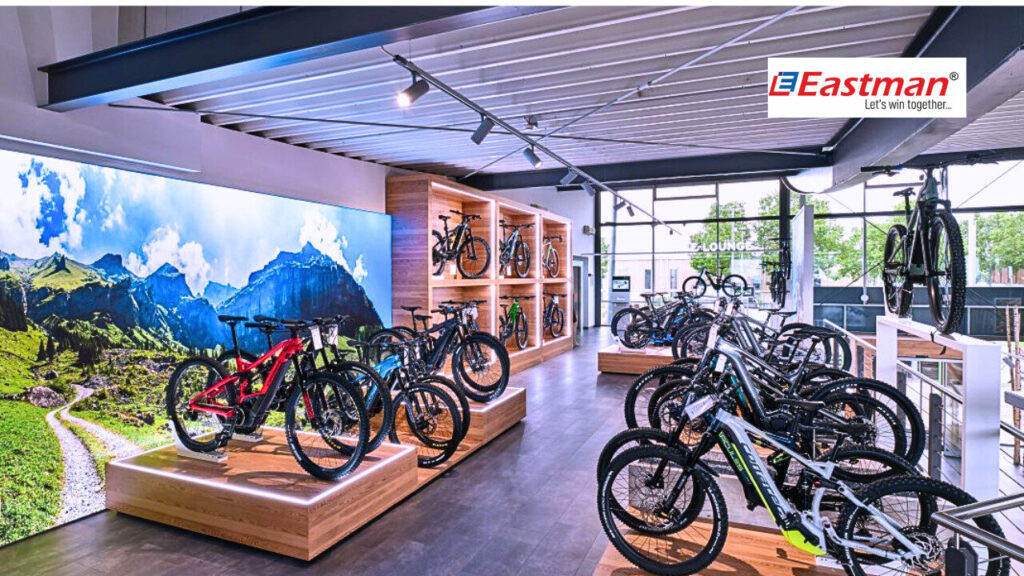
With a rapidly growing global demand for good quality, affordable bicycles, many distributors are seeking the competitive edge by contracting OEMs in India. For a long time, perceived imported cycle brands have held sway in the Indian premium segment; however, Indian OEM bicycle manufacturers are now finding appreciation in the world for innovation, cost-efficiency, and dependability—especially among distributors who look for solutions that can be scaled up or customized. Among some of the more trusted offerings in this space is Eastman, which comes with over forty years of manufacturing experience and a heavy overseas presence. What makes Eastman truly special for International distributors is the way they operate to cater to their unique market needs through complete OEM solutions right through from design-and-engineering to assembly to packaging and logistics. The distributors across Latin America, including wholesale bicycle suppliers in Chile, generally source from India because of paramount flexibility, speed, and cost benefits that Indian OEMs like Eastman can provide. With a strong production setup, Eastman, using the best of technology, produces bicycles that conform to international standards and are affordable for resellers and wholesalers. From simple city urban bikes, hard-core mountain bikes, kids’ bikes, to electric versions—Eastman can deliver them all. These bicycles may be user-branded and equipped with client or region-specific specifications. This sort of flexibility enables distributors to go and develop their own unique line of products under their own label, supported by Eastman’s engineering know-how that spans well over several decades. The Eastman OEM services are rather unique, aligning themselves for the B2B markets in contrast with other imported cycle brands in India, which are mainly set for retail markets. The company supports the distributors not just with products but also with quality assurance, timely deliveries, and constant technical services which help smooth and streamline the whole supply chain. In addition to this, Eastman follows sustainable manufacturing practices, which is in accordance with all the modern-day trends of greener transportation solutions; this gives distributors a competitive edge. To sum up, OEM bicycles from India have yet to be fully explored by the world distributors, offering the perfect amalgamation of quality, customization, and cost-efficiency. Eastman stands as a good example of how India can support global endeavors for bicycle companies. For more information pertaining to OEM opportunities with Eastman and to view the entire catalog of Eastman bicycles.
“The shipment left on time,” they said. What happened next is the real story.
It was a routine shipment—or at least, it was supposed to be. The container was sealed in Ludhiana. Documentation was cleared. The vessel booking was confirmed. The update sent to the buyer in Chile was simple: “Shipment departed on schedule.” For many exporters, that’s the end of the story. But for importers across Latin America—Mexico, Chile, Colombia, Peru, and beyond—that’s where the real story begins. The Reality Behind “On-Time Shipment” If you’ve been importing bicycle parts or components, you already know this: Shipping delays in Latin America are rarely caused at origin. The actual disruption happens after the vessel sails. Let’s break down what we’ve seen over 50+ years of exporting from India to LATAM markets: 1. Port Congestion in Latin America Even when transit time from India to LATAM is calculated at 35–55 days, congestion at ports like: …can add 7–21 days of delay. 2. Customs Clearance Bottlenecks Documentation mismatches, random inspections, or changing import policies can delay cargo unexpectedly. For example: Result: Cargo sits idle while costs increase. 3. Transshipment Risks Many shipments from India to Latin America are not direct. They pass through: Each touchpoint introduces: 4. Inland Logistics Delays Even after port clearance, delays continue: Transit Time India to LATAM: What Importers Expect vs Reality Route Expected Transit Time Realistic Timeline India → Chile 40–45 days 50–65 days India → Colombia 35–40 days 45–60 days India → Mexico 30–35 days 40–55 days India → Peru 38–45 days 50–65 days This is why keywords like “tiempo envío India Chile” and “shipping delays Latin America” are not just search terms—they reflect real operational pain. A Story From Our Experience A distributor in Colombia once told us: “We planned our entire season based on your dispatch date.” The shipment was on time from India. But: Total delay: 28 days The impact? That’s when we realized: Exporting is not about shipping. It’s about controlling uncertainty. What Smart Importers in Latin America Are Doing Differently Over the years, experienced buyers across LATAM have shifted their strategy. 1. Buffer-Based Planning Instead of relying on standard transit time: 2. Mixed Shipment Strategy Rather than one large shipment: This reduces risk exposure. 3. Strong Exporter Coordination They don’t just buy products—they partner with exporters who: How We Handle Shipping Uncertainty at Eastman At Eastman Industries Limited, we’ve built our export system around one principle: Transparency over assumptions. What we do differently: ✔ Pre-dispatch documentation validation✔ HS code accuracy for bicycle parts✔ Route optimization (minimizing transshipment risk)✔ Realistic—not optimistic—delivery timelines✔ Continuous buyer communication Because for us: “Shipment dispatched” is not success.“Shipment delivered as planned” is. Our Product Expertise (Supporting Your Supply Chain) We supply complete bicycle parts and components for bulk importers across Latin America: Designed for: Why This Matters for LATAM Buyers If you’re importing into: Chile, Colombia, Mexico, Peru, Ecuador, Argentina, Brazil, or Central America— Then your biggest risk is not price. 👉 It’s uncertainty in delivery. And that directly affects: The Real Question You Should Ask Your Supplier Not: ❌ “When will you ship?” But: “How do you manage delays after shipment?” Because that’s where most exporters fail—and where experienced partners stand out. FAQs (For Latin American Importers) 1. Why are there frequent shipping delays to Latin America? Due to port congestion, customs clearance issues, transshipment dependencies, and inland logistics challenges. 2. What is the average transit time from India to Chile? Typically 40–45 days, but realistically 50–65 days considering delays. 3. How can I reduce shipping delays risk? 4. Are delays more common for bicycle parts shipments? Not specifically, but incorrect HS codes or documentation errors in components can increase inspection probability. 5. What is the best shipping strategy for LATAM importers? Final Thought The next time someone tells you: “Your shipment has left on time.” Pause for a second. Because the real question is: “What happens next?” Let’s Plan Your Next Shipment the Right Way If you’re importing bicycle parts into Latin America and want predictable supply—not surprises—connect with us:
Last year, a buyer from Chile told us something we still think about…
He didn’t start the conversation with pricing.He didn’t ask about specifications. He said: “We saved on buying cost… but we lost our season.” That line has stayed with us — because we’ve seen it happen across Latin America, from Mexico to Chile to Colombia. This blog is about what really happens behind bicycle parts import decisions — and why many importers underestimate one thing that matters more than price: Landed cost. What Happened to That Chilean Importer Last year, a bicycle parts importer from Chile reached out after facing an issue. On paper, everything looked perfect: But reality played out differently. What went wrong: By the time the goods reached Chile: The result? The “cheaper deal” became more expensive than a higher-priced reliable supplier. The Real Problem: Misunderstanding Landed Cost Most importers in Latin America focus on: “What is the price per unit?” But experienced buyers ask: “What is my final cost when the product is ready to sell?” This is where many importers searching for“bicycle parts import Latin America” or“importar repuestos bicicleta”make a critical mistake. What is Landed Cost in Bicycle Parts Import? Landed cost is not just product price. It includes: This is your real profitability number Why This Matters More in Latin America Import conditions in LATAM are unique: 1. Longer Transit Times India → Chile / Mexico / Colombia often takes 30–60+ days 2. Customs Complexity Documentation errors or delays can extend clearance timelines 3. Seasonal Demand Sensitivity Miss timing → lose market opportunity 4. Currency Fluctuation Risk A small change can affect costo importación LATAM The Difference Between Cheap and Profitable Let’s break it down simply: Factor Cheap Supplier Reliable Export Partner Price Lower Slightly higher Delivery Uncertain Predictable Quality Inconsistent Standardized Support Minimal Active Outcome Risk Stability Smart importers don’t chase low priceThey optimize total outcome What Experienced Importers Do Differently Across Latin America, the most successful distributors follow a different approach: They Evaluate Beyond Price They consider: They Plan for Reality, Not Promises Instead of trusting: “Shipment will arrive in 45 days” They plan for: “What if it takes 60 days?” They Build Long-Term Supplier Relationships They avoid: How We Support Latin American Importers At Eastman Industries Limited, we’ve worked with importers across Latin America for decades. We understand: What We Focus On Instead of just selling products, we focus on: Consistency in Supply Uniform quality across bulk shipments Export-Ready Packaging Designed for long-distance shipping Documentation Accuracy Reducing customs-related delays Communication Transparency Clear timelines, realistic commitments Bicycle Parts We Export We supply a wide range of components for bulk importers: A Simple Question Every Importer Should Ask Before confirming your next order, ask: “Am I optimizing price… or profit?” Because those are not the same. Final Thought That Chilean importer didn’t make a mistake because of lack of experience. He made it because the deal looked profitable — until reality showed up. And in international trade, especially in Latin America: What looks cheap is not always profitableWhat is reliable is often more valuable Frequently Asked Questions (FAQ) 1. What is the biggest mistake in bicycle parts import in Latin America? Focusing only on product price instead of total landed cost, including logistics, delays, and quality risks. 2. How can importers reduce risk when sourcing from India? By working with experienced exporters, verifying bulk consistency, and ensuring proper documentation and packaging standards. 3. What is typical transit time from India to Latin America? Usually between 30 to 60 days, depending on destination and shipping conditions. 4. Why is bulk quality different from samples? Samples are often hand-picked, while bulk production depends on process consistency. Reliable Bicycle parts exporters ensure standardization. 5. How can I calculate landed cost for bicycle parts? Include product cost, freight, duties, inland transport, risk factor, and potential delay impact.
MOQ Misunderstandings: The Silent Risk in Bicycle Parts Sourcing
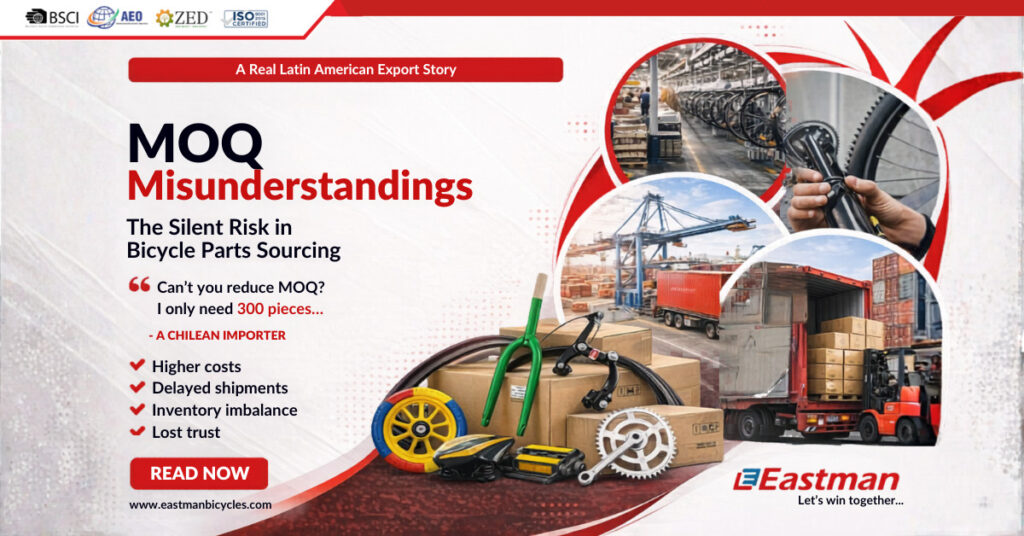
By Latin American Export Marketing Specialist A Conversation That Happens Too Often A few months ago, I was on a call with an importer from Chile. He was experienced. Smart. Knew his market well But he asked me a question I’ve heard many times in my export journey: “Raj, can you reduce MOQ? I only need 300 pieces for now.” We were discussing brake sets. The MOQ was 1,000 units. I paused—not because the question was unusual, but because I knew what was coming next. If not handled properly, this small misunderstanding could lead to: And most importantly—lost trust between buyer and exporter. This is why I’m writing this. MOQ is not just a number.It’s one of the most misunderstood parts of bicycle parts sourcing. What MOQ Really Means (From an Exporter’s Perspective) Let me explain this in simple terms. MOQ (Minimum Order Quantity) is not something exporters randomly decide. It comes from: For example: If we produce freewheels, the machines are set up for a batch. Running that machine for 300 pieces vs 1,000 pieces: So when MOQ is set, it is actually the minimum efficient production level. Where Importers Get It Wrong Over the years, working with buyers across Mexico, Colombia, Peru, and Brazil, I’ve seen a pattern. MOQ misunderstandings usually fall into these categories: 1. “MOQ is Just a Starting Point for Negotiation” Many buyers believe MOQ is flexible like pricing. Yes, we can sometimes adjust—but not always. When MOQ is pushed too low: 2. “I’ll Order Small First, Then Increase Later” This sounds logical. But in reality: 3. “I Can Mix Anything to Meet MOQ” This is another common misunderstanding. Buyers often say: “Can I take 100 chains, 100 pedals, 100 saddles?” But MOQ is usually: Not all items can be mixed easily. 4. Ignoring Packaging Reality One importer from Peru once confirmed an order below MOQ. Later we faced an issue: MOQ is also linked to: How MOQ Mistakes Actually Hurt Your Business Let me share what happens behind the scenes. 1. Your Cost Quietly Increases You think you saved money by ordering less. But: 2. Your Inventory Becomes Unbalanced I’ve seen importers in Central America: All because MOQ planning was not aligned with demand. 3. You Miss Your Selling Season This is the most painful one. A buyer in Colombia once delayed order finalization due to MOQ negotiation. By the time production started: And in bicycle business, timing is everything. 4. Your Cash Flow Gets Blocked On the other side: Ordering without MOQ planning can also lead to: MOQ and Container Reality (This Is Where Most People Fail) Here’s something I always tell my buyers: “MOQ should match your container—not just your requirement.” Let’s say: What happens? This is where smart importers win. They don’t just think: They think: What Smart Latin American Importers Do Differently After working with serious buyers across Latin America, I’ve noticed clear patterns. 1. They Plan Based on Sales, Not Assumptions They ask: 2. They Don’t Chase Too Many SKUs Instead of ordering 20 different models: They focus on: This makes MOQ easier to manage. 3. They Use Combination Strategy They balance orders like this: This creates a well-optimized shipment. 4. They Ask Better Questions Instead of asking: “Can you reduce MOQ?” They ask: This changes the entire conversation. Where MOQ Matters Most in Bicycle Parts From my experience, here’s how MOQ typically behaves: High MOQ Products These require: Medium MOQ Products These are more flexible—but still structured. Low MOQ Products These are useful for balancing your shipment. How We Approach MOQ at Eastman Industries Limited At Eastman, we’ve been exporting bicycle parts globally for over 50 years. Our experience has taught us one thing: Every market is different. Especially Latin America. We don’t treat MOQ as a rigid number. We look at: Our Strength as an Export Partner Product Range We Handle We export a wide range of bicycle parts, including: A Simple Rule I Always Share If you remember only one thing from this article, remember this: MOQ is not a restriction. It is a planning tool. When you understand it properly: Final Thoughts MOQ misunderstandings don’t create problems immediately. They create slow damage: But the good news is: Once you understand how MOQ works, you gain a strong advantage over your competitors. FAQ Section 1. Can MOQ be reduced for first orders? Sometimes yes, but it depends on the product and production setup. Lower MOQ may increase cost per unit. 2. Why do suppliers insist on MOQ? MOQ ensures efficient production, cost control, and consistent quality. 3. Can I mix different bicycle parts to meet MOQ? In some cases yes, but not all products can be combined due to production and packaging limitations. 4. Which bicycle parts have the highest MOQ? Frame sets, forks, and rims usually have higher MOQ due to manufacturing complexity. 5. How can I manage MOQ with limited budget? Focus on fewer SKUs, prioritize fast-moving products, and optimize container loading. 6. Does MOQ affect shipping cost? Yes. Poor MOQ planning can lead to underutilized containers, increasing per-unit shipping cost.
Shipment Delays Destroy Margins Faster Than Pricing Differences
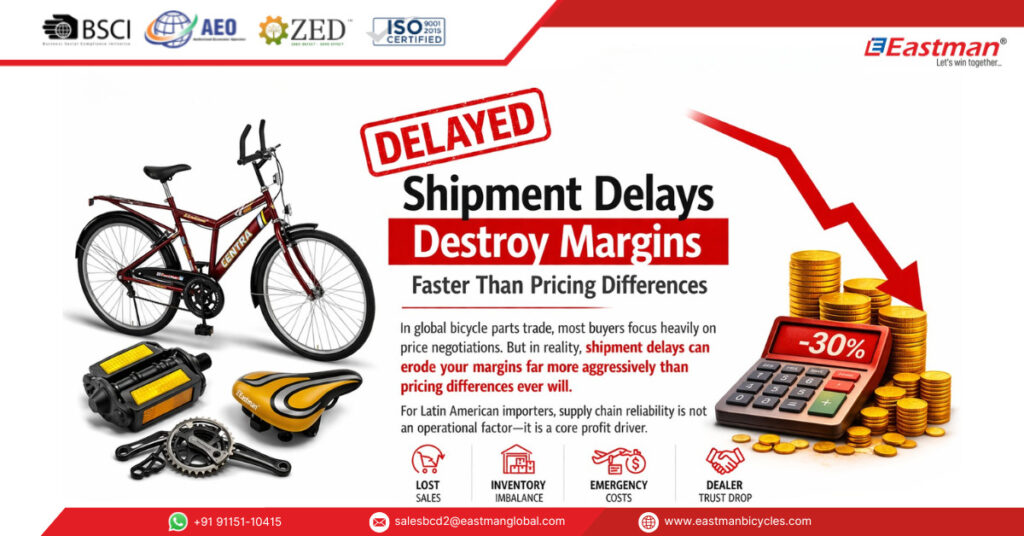
In global bicycle parts trade, most buyers focus heavily on price negotiations. A few cents saved per unit often feels like a win. But in reality, that’s rarely where profits are won or lost. Shipment delays can erode your margins far more aggressively than pricing differences ever will. In our experience working with international buyers, we’ve seen importers lose entire seasonal sales—not because of pricing—but because shipments arrived 20–30 days late. For bicycle parts importers, distributors, and OEM assemblers across Latin America, supply chain reliability is not just an operational factor—it is a core profit driver. The Hidden Cost of Shipment Delays When a shipment is delayed, the impact is rarely isolated. It creates a cascading effect across your entire business. 1. Lost Sales Opportunities If your stock of fast-moving products like freewheels, chains, brake sets, and pedals runs out during peak demand, you don’t just delay revenue—you lose customers. Dealers and retailers will switch to competitors who can supply immediately. Sounds small? It’s not. This is where many importers quietly lose market share. 2. Inventory Imbalance Delayed shipments create two major risks: This imbalance disrupts your working capital cycle and reduces overall efficiency. 3. Emergency Procurement at Higher Costs When shipments don’t arrive on time, buyers are forced to react quickly: We’ve seen cases where a buyer saved a few cents per unit initially—but ended up increasing total costs by over 30% due to emergency decisions. 4. Dealer & Distributor Friction Your downstream network expects consistency. If you fail to supply: In B2B markets, reliability builds relationships far more than price ever will. Price vs. Delivery: A Real Margin Comparison Let’s break it down with a simple scenario: Scenario A: Cheaper Supplier (Unreliable Delivery) Result: Scenario B: Slightly Higher Price (Reliable Supply Partner) Result: Conclusion The second option often generates significantly higher net profit—despite a higher unit price. Because in real business, continuity beats cost savings. Why Shipment Delays Happen in Bicycle Parts Trade Understanding the root causes helps importers make better sourcing decisions. Common Reasons: The key issue is rarely external factors alone—it’s the supplier’s ability to manage exports professionally. What Reliable Export Partners Do Differently Professional export-oriented suppliers understand that international buyers value predictability over promises. Here’s what sets them apart: 1. Realistic Order Commitments They don’t overpromise. They commit only to timelines they can actually deliver. 2. Strong Supply Chain Coordination Reliable exporters ensure alignment between: 3. Export Process Expertise Experienced export partners: 4. Consistent Multi-Market Supply Exporters already supplying multiple countries are better equipped to handle: Why Latin American Importers Must Prioritize Delivery Reliability Markets like Mexico, Chile, Colombia, Peru, and Brazil come with added complexity: Because of this, even a small delay at the supplier level gets amplified across the entire supply chain. That’s why choosing the right export partner is critical. Strategic Shift: From Price Buying to Risk-Based Buying Smart importers are changing how they evaluate suppliers. Instead of asking: “Who is the cheapest supplier?” They now ask: “Who can consistently deliver without disruption?” This shift leads to: A Practical Perspective for Importers Suppliers with strong export systems, consistent shipment history, and structured processes usually deliver better long-term results. Importers who focus only on price often face: On the other hand, those who prioritize reliability build: Final Takeaway In international bicycle parts trade: Margins are not lost in negotiation tables. They are lost in delayed shipments. Choosing a slightly higher-priced but reliable export partner is not a cost—it is a strategic decision that protects: Author Raj BahadurB2B Export Digital Marketing SpecialistEastman Industries Limited Frequently Asked Questions (FAQs) 1. Why are shipment delays more damaging than price differences? Because delays directly impact sales, inventory flow, and customer relationships, while price differences are usually small and predictable. 2. How can I identify a reliable bicycle parts export supplier? Look for: 3. What is the typical lead time for bicycle parts imports? Generally: 4. Should I always choose higher-priced suppliers? Not always. But if a slightly higher price ensures reliable delivery, it usually leads to better overall profitability. 5. How can importers reduce supply chain risks?
How Chile’s Top Bicycle Manufacturers are Shaping Latin America’s Cycling Trends
Latin America is undergoing a significant shift in urban mobility, driven by the growing prevalence of environmental awareness and health-promoting lifestyles. At the vanguard of this movement flies Chile, where the premier bicycle manufacturers are making a major impact not only domestically but all over the continent. Companies such as Eastman Bicycles—synonymous with quality and innovation—are shaping regional trends in cycling preferences and infrastructure, thereby elevating Chile to the status of a bicycle powerhouse. The Rise of Eco-Friendly Transport Globally, the bicycle industry is having its green revolution. The shift toward smart cities and carbon-neutral modes of transportation is well taught in papers such as those by Market Prospects, where the bicycle demand was viewed as a rapidly increasing factor, mainly for electric and hybrid bicycles. The bicycle industry in Chile has not taken these changes lightly. The leading bicycle manufacturers in Chile consider their interesting clientele and are offering state-of-the-art materials, ergonomic designs, and sustainable manufacturing processes in their product line. Cycling infrastructure is a crucial element cities such as Santiago and Valparaíso have promoted. There have been bike-sharing programs and subsidies in favor of adopting two-wheeled transport. Manufacturers are all into making models for urban commuters, adventure cyclists, and environmentally conscious consumers. Adventure-Ready Innovation From adventures highlighted by Skedaddle, Chile’s varied landscape – from the Atacama Desert to the Andes – has created demands for sports-performance bicycles. To fulfill this need, bicycle manufacturers such as Eastman Bicycles provide a mixture of technical skills in providing a highly versatile and durable bicycle that can handle both on-road and off-road scenarios. These bicycles would serve well in support of Latin American adventure tourism, providing a good quality bicycle capable of dealing with diversified geography. Chile and Regional Integration of the Bicycle Industry The Chilean bicycle industry is operating in a complementary manner with others. The major bicycle makers of Chile export not just products but also innovation and sustainability throughout Latin America. Eastman Bicycles, for instance, is a leading bicycle exporter from India and is establishing an increasing manufacturing presence in Latin America. Their hybrid business model thus enables them to produce globally competitive bicycles that are affordable and tough at the same time. Furthermore, there is a mutual influence between other South American manufacturers and regional impact on cycling industries. Bicycle exports from Brazil have emerged as a top competitor in the region along with Peru. Chilean manufacturers distinguish themselves by balancing high production standards with better infrastructural distribution networks and capacity for innovative design. Incorporates into Future-Time Proposition Chile cannot be excluded from the Latin American future of cycling. Following world trends as identified by major industry forecasts and capitalizing on the culture’s love for cycling in Latin America, the country’s best manufacturers are leading the market toward smart and environmentally friendly transport solutions. Brands like Eastman Bicycles are a testimony to these frontiers, their operations dedicated to excellence, sustainability, and regional integration. Whether Eastman is exporting bicycles from India or making specialized bikes for the Latin American terrain, Eastman has continually raised the bar in production standards. With the continued development of infrastructure, growing consumer awareness, and policy support, Chile is set to lead Latin America along a new path of sustainability-orientated tourism and sports biking.
Eastman Bicycles: India’s Leading Cycle Manufacturer Powering Rides Worldwide
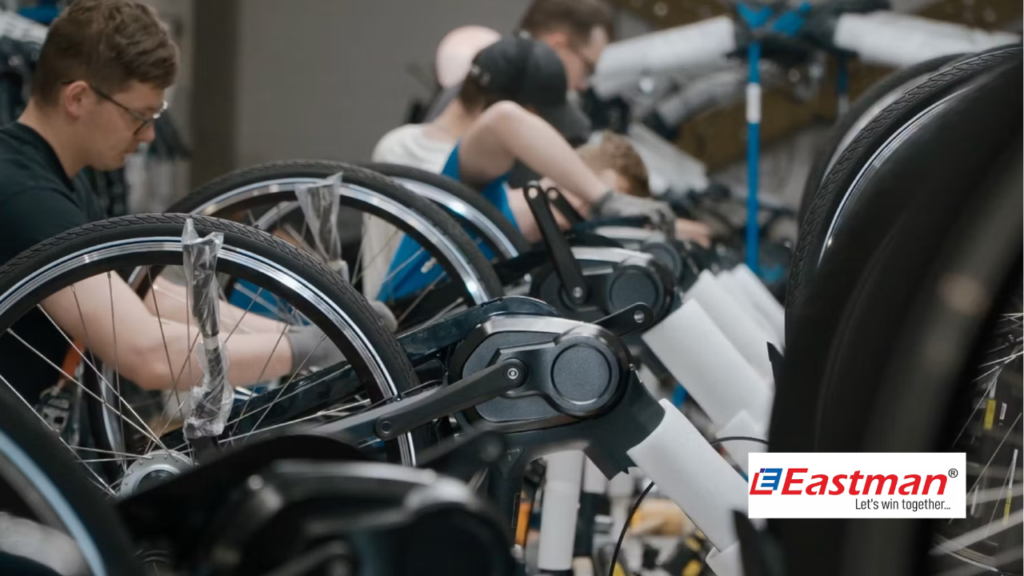
The bicycle market in India is one of the most extensive, both in terms of demand and production. With the rise of cycling as a healthy and environmentally friendly method of transportation, bicycle manufacturing in India has been increasing steadily. Among the giants, Eastman Bicycles has emerged as the largest cycle manufacturer in India, putting forth world-class bicycles for both the national and international markets. A Legacy of Quality and Innovation Eastman Bicycles is world-renowned through the Eastman Group. Throughout the years, this brand has associated itself with notions of quality, innovation, and customer satisfaction. Established under the ambit of companies producing durable and high-performance bicycles, the Eastman brand has developed into an international one and now exports to over 100 countries. Eastman Bicycles, with its advanced R&D capabilities and facilities that utilise automation and technologies, can produce almost every type of bicycle including mountain bikes, city bikes, and kids’ bikes. We manufacture every bike with precision and the highest quality standards, while observing ISO 9001:2015 and CE certifications in this process. Millions of People Worldwide Trust Them The company is capable of meeting the highest standards of quality, comfort, and durability because Eastman bicycles are manufactured using an integrated process – from frame building, painting, and assembly to more rigorous quality checks – using the finest of materials and components. Their global presence and worldwide quality control system have made them a trusted brand in developing and developed countries. Eastman bicycles are a wonderful option tailor-made for all riders, with the categories being meant for fitness, commuting, recreation, among others. Commitment to Sustainability Being a responsible manufacturer, Eastman Bicycles put major emphasis on environmental issues. The company operates on environmentally safe procedures throughout their production and actively promotes cycling as a green alternative to motorised transport. Why Eastman Bicycles? · More than 40 years of manufacturing history · Export to more than 100 countries around the globe · Certified and state-of-the-art technology · Variety of products for different ages and terrains · Emphasis given to customer satisfaction and after-sales service Conclusion: India’s largest bicycle manufacturer-Easman Bicycles still retains the doctrine of innovation, quality, and global trust. Whether you’re a beginner in riding or a serious one, Eastman brings precisely the right bike into your life journey. Know more at Eastman Bicycles and bid adieu by choosing your dream bike now.
What Makes a Great Export Bicycle? Insights from Eastman’s Decades of Expertis
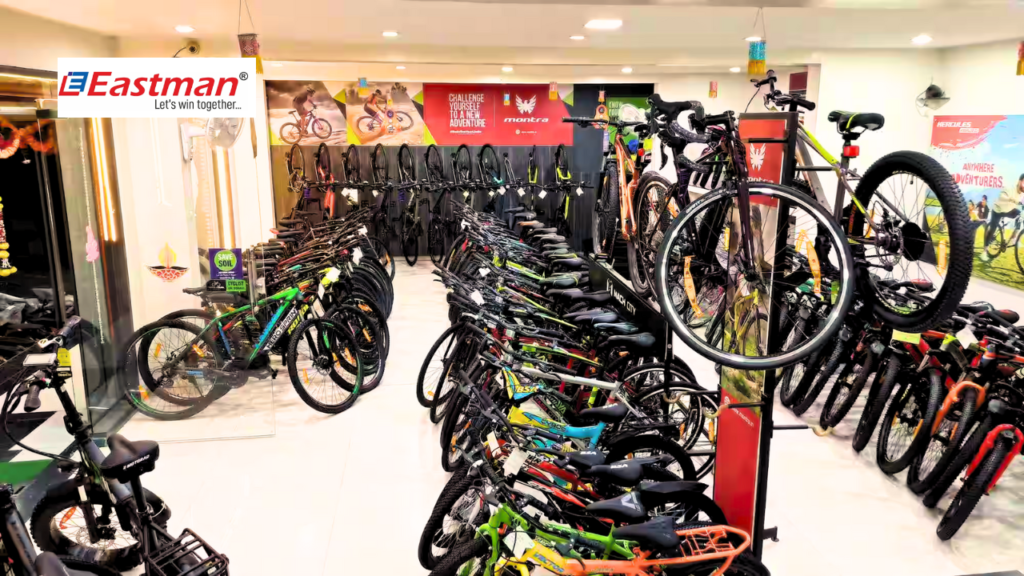
In the present competitive global market, a high-quality export bicycle can do nothing but serve its intended purpose while meeting international standards for quality, rigidity, design, and adaptability. Export bicycles are considered by a vast spectrum of performance criteria depending on where the bike is shipped – to developed urban markets or rugged rural terrains. With experience accrued over several decades in the industry, these key aspects come out to define whether an export bicycle is worth selling. 1. Engineering Precision and Material Quality Good engineering is the basis for any dependable bicycle. Export bicycles have to endure different road conditions, climates, and types of uses. Precision engineering empowers a frame to be set in proper alignment; transitions between gears are smooth, and the cyclist enjoys comfort. The materials generally used for export bicycles are high-tensile steels, lightweight aluminium, and other alloys to achieve the necessary balance between strength and weight. The cycle manufacturing company in Chile with frames that are lightweight but can bear loads, particularly in the segments of daily commuters and cargo. 2. Adaptability to Global Demand and Preferences Markets across continents differ in expectations and terrains. An excellent export bicycle has been designed for flexibility. Manufacturers need to understand local market requirements and target their product range accordingly – for mountain bikes in rugged terrains, road bikes for urban commuting, or utility bikes for everyday use. For example, wholesale bicycle suppliers Chile prefer models that are highly durable and require low maintenance because they correspond to the requirements of their end users. 3. Compliance with International Standards To successfully enter international markets, bicycles need to comply with stringent safety and quality standards such as those of ISO, EN, and CPSC. These standards ensure that components – brakes, chains, reflectors, tyres, and frames – are safe by global standards. Regular audits and quality assurance programmes, coupled with traceability systems, are important to win importer confidence and cement long-term partnerships. 4. Sustainable Manufacturing Practices Sustainability constitutes a central point in international trade today. Eco-conscious consumers and importers demand bicycles made using responsible means—be it recycled material, energy-saving production, or lower carbon emissions. Export-orientated manufacturers, therefore, must save up for green production technologies to comply with the environmental regulations and the demands of their consumers. 5. After-sales support and spare parts availability An export bicycle is much more than a product – it goes through the entire lifecycle. Global buyers, including wholesale bicycle suppliers in Chile, do appreciate after-sales support and the availability of spare parts. Manufacturers that can sustain the supply of spares and maintain an appropriate and responsive service system stand a greater chance of being ordered on a repeat basis and joining long-term business. Conclusion An export bicycle is a perfect blend of performance, durability, compliance, adaptability, and sustainability. It represents the deep domain knowledge of the manufacturer and achieves an excellent standard of the technical know-how needed to meet various international standards. Those who readily adhere to these tenets have created a bond of trust across the continent and supply chain. A name synonymous with decades of experience winning trust for extortion bicycle building on the global scale is none other than Eastman Bicycles—an export bicycle industry name that is building its future.
Steel vs. Alloy: Choosing the Right Bicycle Frame for Your Market
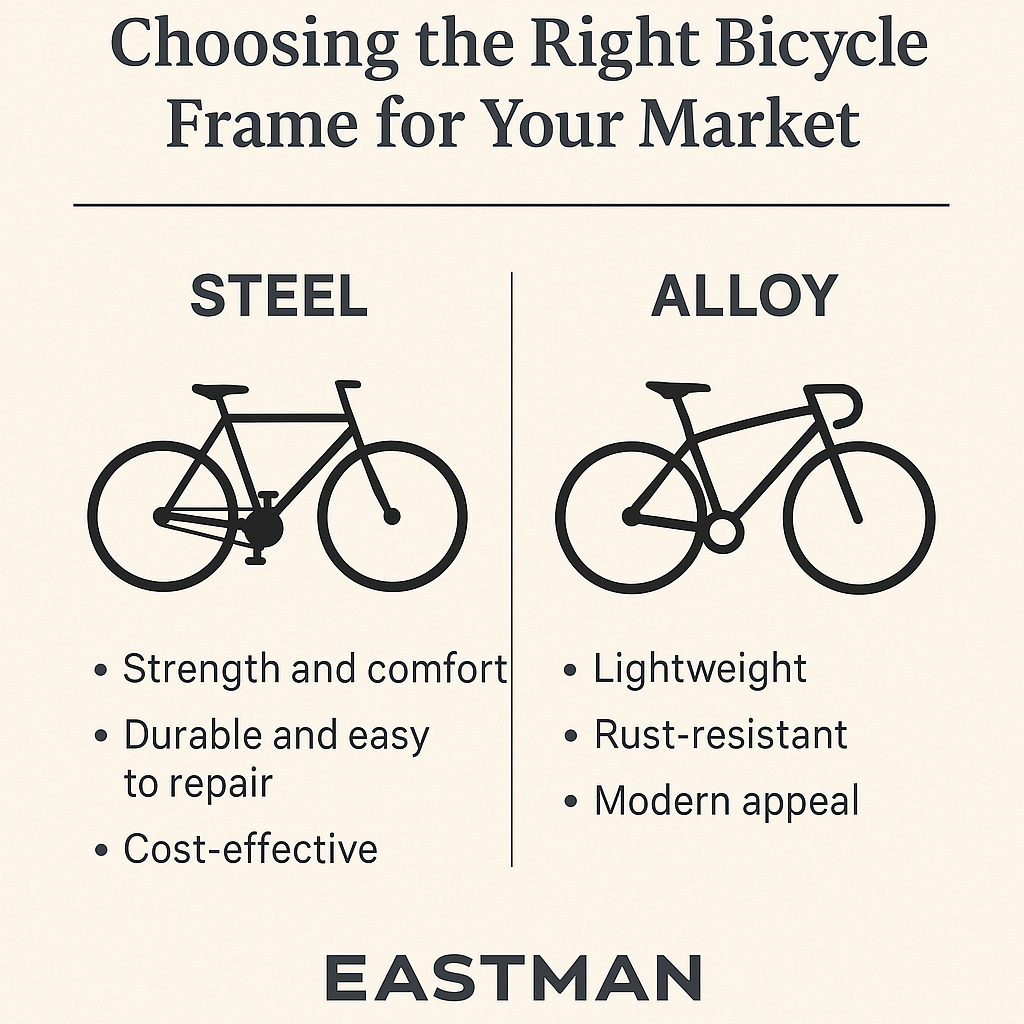
The choice of bicycle frame has become a subject of level contention if one were to consider steel versus alloy. Both materials have their own set of qualities, and knowing what each brings makes sense for distributors, retailers, and consumers searching for a bicycle from the best bicycle manufacturers in Bolivia or Eastman Bicycles, the biggest cycle manufacturer in India. Steel Bicycle Frames: Strength and Comfort Steel is considered the original bicycle-making material. Renowned for their strengthand durability, steel frames are suitable for long-distance riders and roughterrain. The material exhibits an innate flexibility that absorbs roadvibrations and, therefore, pays out comfort to a great extent – that is allappreciated by commuters and touring cyclists. Frame repairs are relatively easy with steel frames. In remote locations oremerging cycle market sectors, steel offers a viable alternative. This makes steelvaluable in a market where ease of maintenance and the selling point is life. Aluminium Alloy Bicycle Frames: Light and Trendy Aluminum alloy frame, on the contrary, is considered lightweight and rust-resistant, creating a huge demand worldwide. Their design is performance-orientated and thus better suited for urban commuters, recreational cyclists, and racers. In the city, the extra weight slows acceleration and the “feel” of braking and stopping, especially when these movements need to be repeated constantly. Experimental alloy frame manufacturers are gaining momentum in Bolivia, the leading bicycle manufacturers, while doing their best according to the increasing urban cycling culture on the continental side. These bicycles are designed to appeal to the younger generation and working class who prefer sleek, lightweight, and low-maintenance bicycles for daily commutes. Eastman Bicycles, the largest cycle manufacturer in India, offers steel or alloy frame options as customization for distributors abroad to better target their own local markets. Thus, their worldwide presence and quality standards make them a most reliable supplier for retailers in Bolivia and Latin America, among others. Market Considerations: Picking the Right Frame The target markets’ needs determine the choice of steel or alloy. For example: Urban Markets: Alloy frames present lightweight, anti-rust performance. Rural or Off-Road Markets: Steel offers toughness and easy maintenance. Budget Constraints: The usual assumption is that steel is cheaper, but under certain circumstances, steel might provide a better long-term option for some segments. Eastman Bicycles, through versatile manufacturing capabilities and export networks, assists their international partners in deciding on the right frame material based on their market analysis. Conclusion There is no concrete answer when it comes to choosing between steel and alloy bicycle frames. When the partners understand the requisite way of working with the end market, distributors can too provide niche solutions that meet customer expectations, such as Eastman Bicycles, considered the largest cycle manufacturer in India. By sourcing from the top bicycle manufacturers in Bolivia or entering new markets, the right choice of frame can dramatically enhance customer satisfaction and brand loyalty.
Why ‘Made in India’ Bicycles Are Gaining Global Traction: Inside Eastman’s Export Success
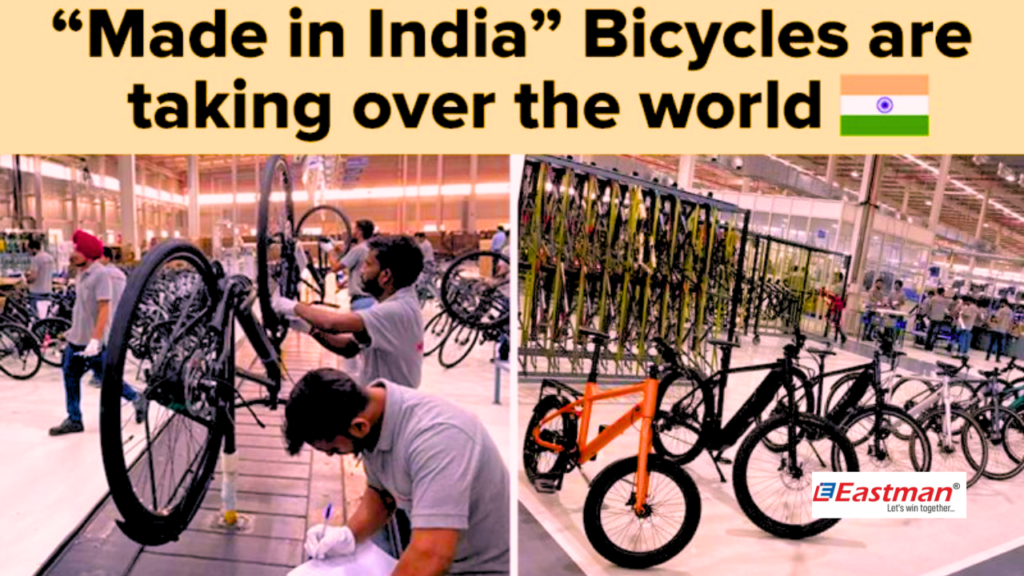
India has always been considered an inexpensive production site for a variety of industries with superior quality standards. A domain that is gaining considerable momentum on the global front is bicycle manufacturing. Standing apart from the rest is Eastman Industries, one of the largest exporters of bicycles from India, whose continued emphasis on quality, innovation, and global partnerships is elevating the status of Made-in-India bicycles on various continents. Rising Demand for Indian Bicycles With increasing sustainability for mobility and healthy lifestyles, bicycles are evolving to be the best mode of travel and exercise. Different countries in Latin America, Africa, Europe, and Asia are sourcing cycles from India. Indian cycles are attractive owing to the perfect blend of cost-effectiveness, durability, and adherence to international standards. With the increased demand for Indian bicycles, Eastman Bicycles streamlined its manufacturing and export structure to cater to the growing international customers. The company is not just exporting bicycles – with every shipment, it delivers value, reliability, and trust. Eastman: A Preferred Bicycle Exporter from India Eastman’s journey from a domestic manufacturer to a global bicycle exporter operating out of India is a study in strategic growth. The brand has invested heavily in state-of-the-art manufacturing facilities, R&D, and global logistics. Integrating global supply chain best practices with Indian strengths in manufacturing, Eastman has built a solid reputation in over 65 countries. This also empowers the company sufficiently to offer custom-built bicycle models meeting specific market needs, reinforcing its global appeal. Whether mountain bikes for the South American terrain or city bikes for lightweight cruising in Europe, Eastman produces to address each region’s distinct needs. Strong Latin American Presence Latin America is one of the most dynamic regions for Eastman exports. In particular, the company has carved out an important niche in Chile. Through its partnership with wholesale bicycle suppliers there, it makes sure that Eastman products are easy to find at major retail and wholesale markets throughout Chile. This unique association allows Chilean firms to procure a wide range of quality bicycles at very competitive prices while Eastman builds a loyal international clientele. Eastman has become a household name among wholesale suppliers that Chile depends on for timely delivery and its strong networks with distributors. Innovation and Quality: The Cornerstones of Success What separates Eastman from other exporters is its commitment towards innovation and quality assurance. Each and every bicycle that leaves the factory is subjected to tests for durability, safety, and performance. The engineering team is always busy with tests, studies, and the design of new ways, features, and applications that improve rider comfort, efficiency, and aesthetics. Eastman guarantees that their products comply with international safety certifications for export-ready purposes in markets with the most stringent requirements. Conclusion With contemporary urban mobility trends pushing toward sustainability and cost-effective solutions, bicycles made in India have found demand all around the world. Eastman Industries, a leading exporter of bicycles in India, spearheads this revolution internally to keep up with worldwide demand for quality, affordable, and trustworthy products. Through its increasing network of partners, such as wholesale bicycle suppliers Chile, Eastman will be selling not only bicycles but also manufacturing excellence and developer spirit from India to the world.
Made-in-India Bicycles: Rising Export Opportunities

India has been a significant force in the global bicycle market, and today, this position is getting more and more fortified with a huge surge in international demand for Made-in-India bicycles. As sustainability, fitness, and environment-friendly mobility step onto the world stage, Indian bicycle manufacturers leap to fulfill global needs with quality, affordability, and innovation. The momentum is being driven largely by one activity manufacturer, Eastman Industries, which is hailed as the largest cycle manufacturer in India. With an extensive range of bicycles for various terrains and different age groups, Eastman is now a well-known brand in the domestic market as well as in more than eighty countries worldwide. The reason bicycle exporting from India is in demand lies in the strength of manufacturing operations in the country, technically skilled manpower, and the provision of cost-efficient production capabilities. Intense production and stringent quality controls in India have made it a destination source for importers all across the globe. Some examples are the ISO-certified facilities of Eastman Bicycles, contemporary R&D facilities, and a formidable distribution network that maintains the highest standards of quality while ensuring timely delivery of those products. Good export prospects exist in Africa, the Middle East, Southeast Asia, and even some parts of Europe and North America. These places are increasingly adopting bicycles for personal transport, fitness, and last-mile delivery purposes. With urbanisation and environmental concerns looming large, the bicycle is fast being integrated as a part of smart mobility solutions. Eastman is perfectly positioned to take advantage of these opportunities by way of innovation and meeting global standards. Their product lineup varies from road bikes, mountain bikes, children’s bikes, and everything in between to cater to various global segments. More importantly, the company is popular worldwide because of its emphasis on sustainability, lightweightness, and pricing. With government encouragement and a link with world commerce, the area of bicycle export from india has ever-broader possibilities. The “Make in India” initiative further amplifies this potential by promoting worldwide synergy and foreign investments in manufacturing. So the rise of Made-in-India bicycles on the international platform is not just a fad but a clear demonstration of the manufacturing prowess of the nation. It would be the Eastman Bicycles brand that shall start riding India into the global cycling scene, with every revolution of the pedal speaking innovation, reliability, and global impact. For more information on Eastman and how it’s pioneering bicycle manufacturing across the globe, log on to Eastman Bicycles.
Global Shipping Challenges for Bicycle Parts in 2025 and How to Stay Ahead
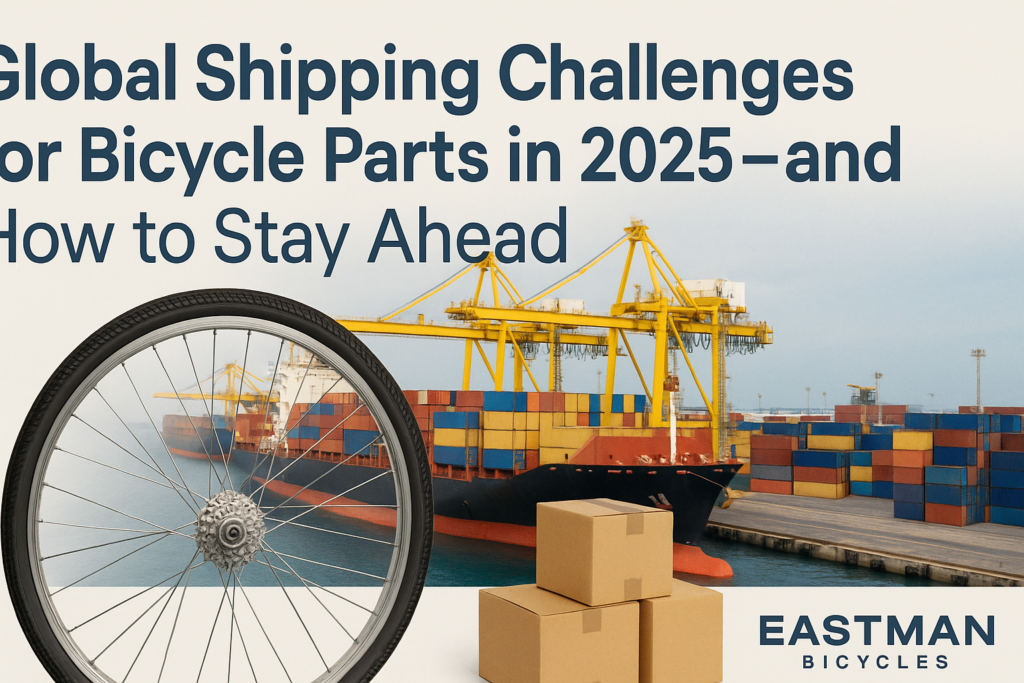
In 2025, amidst the ongoing evolution of global trade, the bicycle industry faces peculiar shipping challenges. Supply chain disruptions, freight cost surges, and geopolitical tensions all hold the power of delaying and thus increasing the cost of bicycle parts. To keep a competitive edge in the global market, all the manufacturers, exporters, and retailers need to tackle these challenges ahead. This brings us to the most pressing issue of rising volatility in shipping routes. The congestion at major ports and the container shortage keep increasing lead times for bicycle parts, and production schedules, along with customer satisfaction, are impacted by these delays. Moreover, for companies that operate with just-in-time inventory modes, these delays are staggering disruptions. On top of that, stricter environmental regulations are also changing the logistics trade. The emission norms set for cargo vessels are good for sustainability but slow down shipping and raise compliance costs. All the more reason to partner with those who have a grasp on global logistics and its nuances. Being the largest cycle manufacturer in peru, Eastman Bicycles has adapted well and in advance to these challenges. Eastman draws on its four decades of experience in the industry through an extensive global network and swift logistic arrangements for the timely delivery of bicycle components or completely assembled bicycles. Investment in forecasting tools and inventory management allowed the company to reduce disruption and maintain a steady output even in times of a volatile market. As a reputable bicycle exporter from India, Eastman Bicycles forges robust working relationships with international shipping providers and freight forwarders. By diversification of transport routes and ports of exit, they mitigate dependency upon any single logistics path, thus enhancing resilience against localised disruptions. In order to retain a lead in 2025, businesses should consider digital supply chains, warehousing optimisation, and trusting reliable manufacturers like Eastman for long-term needs. Getting advanced planning and real-time visibility right is something that can no longer be considered optional. Being in a time when delays and uncertainties are becoming more standard, it is crucial to align with the industry leaders that truly understand shipping in global dynamics. For any parts or complete bikes required, Eastman Bicycles is the partner of choice to procure quality, reliability, and timely delivery regardless of what obstacles dawn. Look at how Eastman Bicycles will assist your business in navigating global shipping intricacies come 2025 and beyond.
Why Eastman Bicycles Is a Preferred Bicycle Parts Supplier for Over 65 Countries
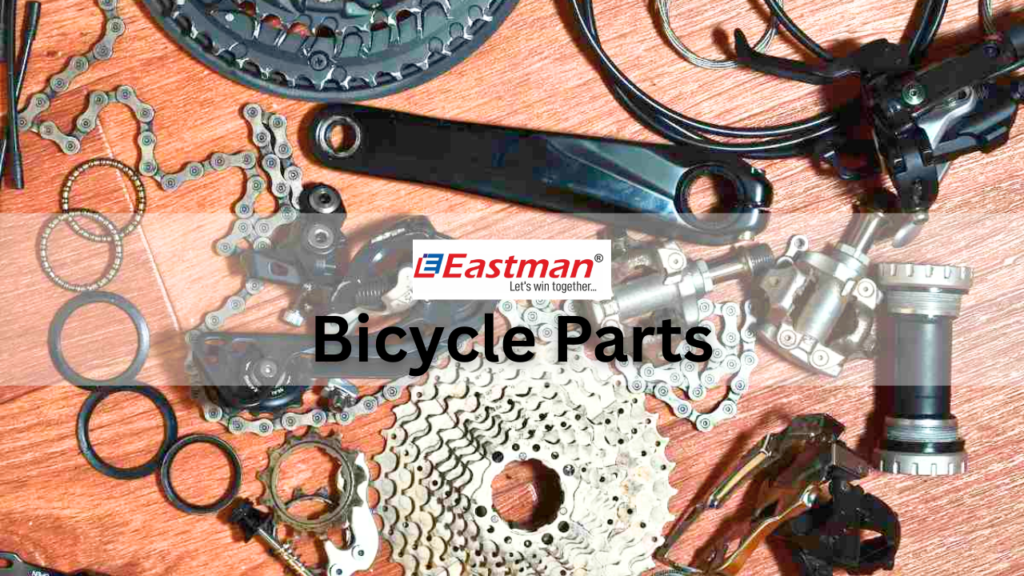
In today’s fiercely competitive globalized market, a poor choice of bicycle parts supplier can result in one’s downfall-related circumstances. For over 40 years, Eastman Bicycles has maintained the prestige of a dependable bicycle exporter from India and an export house for the extended clientele in over 65 countries. What separates Eastman from the rest is not only its reach but also its exacting standards in quality, reliable technology, and customer satisfaction. Being one of the largest cycle manufacturers in India, Eastman Bicycles combined modernized technology with the best craftsmanship to create product parts of international quality. Wide Product Offerings Eastman offers the entire range of bicycle components and accessories for every need – from high-end-performance sports cycles to everyday city bikes. Be it hubs, rims, pedals, or saddles, Eastman tests all its products for durability and performance. Hence, Eastman is a one-stop solution for bike assemblers, retailers, and distributors abroad. Strong Global Presence Having established its footprint in over 65 countries, Eastman boasts a distribution network across Europe, Africa, Southeast Asia, and Latin America. Its presence over all these years in the global markets is proof of consistency and reliability. Eastman, thus, in being a bicycle exporter from India, meets timely delivery, has responsive customer service, and boasts of smooth logistics. Quality Assurance and Certifications Eastman abides by international quality standards such as ISO certifications, thereby ensuring that each part manufactured aligns with very stringent criteria. The manufacturing activity is housed in world-class factories that are fitted with cutting-edge machines and managed by capable persons who foster a culture of quality appreciation at every stage of the construction process. Sustainability and Innovations Eastman Bicycles are not only geared toward ensuring quality; they are equally focused on sustainability issues. As a present-day manufacturer, the company is making active attempts to use eco-friendly manufacturing methods and materials in tandem with an increasing demand for green modes of transport. Customer-Centric Approach What stands at the heart of Eastman’s success is long-term partnership building. The company partners with clients in solving market needs and in offering tailor-made solutions. This has positioned them as virtually preferred suppliers in many regions. Conclusion For companies that seek a reliable, experienced, and forward-thinking partner in the bicycle industry, Eastman Bicycles is, very happily, among the leading exporters of bicycles from India and among the largest cycle manufacturers in India. Having built an enviable track record.