
Sample vs Bulk Order Difference: Why Quality Changes and How to Avoid It
1. A Real Story Every LATAM Importer Knows It started with a perfect sample. A distributor in Chile approved a batch of bicycle pedals from an Indian supplier. The sample was flawless—finish, weight, durability, everything aligned with expectations. But when the bulk shipment arrived after 55 days transit time India to LATAM, the story changed. Scratches. Slight rusting. Inconsistent threading. And by then? The container had already cleared customs. This is the hidden reality behind the sample vs bulk order difference—a challenge many Latin American importers silently face. Table of Contents 2. Why the Sample vs Bulk Order Difference Happens The sample vs bulk order difference is not random—it’s systemic. Samples are often handcrafted, closely inspected, and produced under controlled conditions. Bulk production, however, introduces scale—and with it, variability. This is where bicycle quality control export becomes critical. 3. Why LATAM Buyers Feel This More (Logistics Reality) Latin America has unique logistical challenges: Many buyers report retrasos envíos Latinoamérica stretching delivery timelines by weeks. When quality issues surface after such delays, returns or replacements become economically unviable. 4. Root Causes of Bulk Production Quality Issues 1. Production Scaling Issues Bulk manufacturing introduces: 2. Raw Material Variability Even minor changes in: can lead to inconsistent bicycle parts quality. 3. Weak Supplier Consistency Without strict SOPs, supplier consistency bicycle parts becomes unreliable. 4. Lack of Pre-Shipment Inspection Many importers skip inspections to save costs—this is where problems multiply. 5. Real Scenario: India → Chile Shipment A Colombian importer ordered 5,000 units of bicycle hubs. Total cycle: ~80 days Due to bulk production quality issues, 12% units had bearing misalignment. Result: This is the true cost of ignoring the sample vs bulk order difference. 6. Practical Solutions to Avoid Quality Mismatch 1. Define a Golden Sample Standard Document everything: 2. Implement Third-Party Inspection Use agencies for: 3. Demand Batch Consistency Reports Ensure suppliers provide: 4. Audit Supplier Processes Ask: 5. Align Logistics + Quality Planning Given shipping delays Latin America, build buffers for: 7. Exporter Insight (From Experience) Companies like Eastman Industries Limited, with over 50 years of export experience, have learned that consistency is not about luck—it’s about systems. With global exports and certified manufacturing processes, experienced exporters focus on: This approach significantly reduces bulk production quality issues. 8. Product Perspective: Why It Matters for Bicycle Components In bicycle parts—whether pedals, hubs, chains, or brake systems—even minor inconsistencies can lead to: For LATAM distributors, this directly impacts dealer trust and repeat business. 9. Why This Matters (Business Impact) Ignoring the sample vs bulk order difference leads to: In a price-sensitive LATAM market, this can define profitability. 10. Conclusion: Control Before It Ships The biggest mistake importers make? They trust the sample—but don’t control the process. To succeed in Latin America: Because once the container leaves India—your control is gone. FAQs: Frequently Asked Questions 1. What causes the sample vs bulk order difference? It occurs due to scaling issues, material variation, and inconsistent production processes in bulk manufacturing. 2. Why are there shipping delays in Latin America? Shipping delays Latin America are caused by port congestion, customs procedures, and inland logistics inefficiencies. 3. ¿Por qué hay retrasos en envíos a Latinoamérica? Los retrasos se deben a congestión portuaria, trámites aduaneros y transporte interno lento. 4. How to ensure bicycle quality control export? Use third-party inspections, define clear specifications, and audit supplier processes before shipment. 5. ¿Cómo evitar problemas en pedidos al por mayor? Realizando inspecciones previas, verificando consistencia del proveedor y documentando estándares del producto.
Biggest Mistakes New Bicycle Importers Make (Latin America Focus)
A Costly Lesson from a First Shipment Carlos, a new importer from Chile, had just closed his first bulk deal for bicycle components from India. Prices were competitive, margins looked promising, and demand was rising. But 65 days later, his shipment was still stuck. What was supposed to be a 45-day delivery turned into a nightmare—port congestion, missing documentation, and unexpected delays. His distributors were waiting, cash flow was blocked, and trust was slipping. This is not an isolated story. It’s one of the most common bicycle import mistakes new buyers in Latin America make. Table of Contents The Real Problem Behind Import Failures Most new importers assume importing is just about price negotiation. But in reality, the biggest risks lie in: These issues directly lead to: Common Bicycle Import Mistakes 1. Choosing Suppliers Only Based on Price Low prices often hide: This is one of the most critical bicycle sourcing errors. 2. Ignoring Transit Time Reality Many new buyers underestimate: Typical expectations: 35–40 daysActual reality: 50–70 days 3. Poor Understanding of Shipping Routes LATAM imports often involve: Each adds risk of delay. 4. Documentation Mistakes Incorrect or incomplete: These lead to customs holds—one of the most expensive import supplier mistakes. Why Shipping Delays in Latin America Are So Common Latin America has unique logistics challenges: global supply chain disruptions further increase: Real Scenario: India to Chile Shipment Let’s break a real shipment case: What went wrong? Final impact:Missed retail season + distributor dissatisfaction This highlights why understanding tiempo envío India Chile is critical before placing bulk orders. How to Avoid These Mistakes (Actionable Solutions) Work with Export-Experienced Suppliers Choose suppliers who: Plan Realistic Timelines Always add: Validate Documentation in Advance Before shipment: Optimize Shipment Strategy Exporter Insight (From Industry Experience) Companies like Eastman Industries Limited, with over 50 years of export experience, have seen these mistakes repeatedly. With global exports across multiple regions, including Latin America, experienced exporters: This level of operational maturity significantly reduces risks for buyers. Product Integration (Natural Context) Whether importing: The real challenge isn’t the product—it’s the process. Even high-quality products fail commercially if logistics and planning are weak. Why These Mistakes Hurt Your Business Every delay or error impacts: inefficiencies in supply chains directly affect import profitability. Conclusion: Import Smart, Not Just Cheap Importing bicycles from India offers strong opportunities—but only if done right. Avoiding these bicycle import mistakes isn’t optional—it’s essential. The difference between success and failure lies in: Smart importers don’t just buy—they strategize. FAQs: Frequently Asked Questions 1. What causes shipping delays in Latin America? Shipping delays are mainly caused by port congestion, transshipment routes, and customs clearance issues. 2. ¿Por qué hay retrasos en envíos a Latinoamérica? Los retrasos ocurren por congestión portuaria, procesos aduaneros complejos y rutas de envío indirectas. 3. What is the transit time from India to Latin America? Typical transit time ranges from 45 to 65 days depending on the destination and shipping route. 4. ¿Cuál es el tiempo de envío India Chile? El tiempo de envío suele ser entre 45 y 60 días, pero puede extenderse por retrasos logísticos. 5. How to import bicycles from India successfully? Work with experienced exporters, plan realistic timelines, and ensure accurate documentation.
FOB vs CIF Bicycle Import: The Shipment That Changed Everything
A distributor in Chile once secured what seemed like a “perfect deal” on bicycle components from India. The FOB price looked unbeatable. But when the shipment finally arrived after weeks of uncertainty, the real cost told a different story. Unexpected port charges.Higher freight fluctuations.Custom clearance delays. What started as a profitable deal ended up cutting margins by nearly 18%. This is the reality many Latin American importers face when dealing with FOB vs CIF bicycle import pricing. The Real Problem Behind Pricing Confusion Importers across LATAM frequently deal with: The issue is not just price — it’s visibility of total landed cost. Most buyers compare only invoice values, ignoring the bicycle import cost breakdown that truly defines profitability. Root Causes of Cost Surprises 1. Logistics Bottlenecks Ports in Latin America often experience congestion, increasing demurrage and storage fees. 2. Freight Volatility Ocean freight rates fluctuate significantly, especially on India–LATAM routes. 3. Supplier Pricing Gaps Some exporters quote FOB without clarifying downstream cost exposure. 4. Documentation & Compliance Issues Missing or incorrect paperwork leads to delays and penalties. Real Case: India → Chile Shipment Let’s break down a typical shipment: Transit Reality: What Happened: Result: Final landed cost increased by 12–20% beyond initial expectation FOB vs CIF Bicycle Import – What You Must Know FOB (Free on Board) CIF (Cost, Insurance, Freight) The critical mistake?Assuming CIF is always cheaper or safer. In reality, the best option depends on your control over logistics and your ability to manage landed cost calculation import. Hidden Costs Importers Often Miss Even experienced buyers overlook: These hidden costs import business factors can significantly impact margins. Practical Solutions for LATAM Buyers 1. Always Calculate Landed Cost First Do not compare FOB vs CIF — compare final landed cost. 2. Ask for Cost Breakdown Request detailed pricing: 3. Choose Strategic Incoterms 4. Plan for Delays Factor in: 5. Work with Experienced Exporters Consistency reduces risk more than low pricing. Exporter Insight (From 50+ Years Experience) Exporters with long-term global exposure understand that pricing is not just about numbers — it’s about predictability. Companies like Eastman Industries Limited, with over 50 years of export experience, have learned that: This is especially critical when dealing with bicycle parts and components across long-distance trade routes. Why Landed Cost Accuracy Matters A small miscalculation in import pricing can: In LATAM markets where price sensitivity is high, precision in bicycle export pricing India is not optional — it’s strategic. Conclusion Understanding FOB vs CIF bicycle import is not about choosing one over the other. It’s about: Knowing your total landed costAnticipating hidden expensesPartnering with reliable exportersPlanning for logistics realities The importers who succeed are not the ones who buy cheapest —they are the ones who calculate smartest. FAQs: Frequently Asked Questions 1. What causes shipping delays in Latin America? Shipping delays Latin America are mainly caused by port congestion, customs clearance inefficiencies, and fluctuating freight schedules. 2. ¿Por qué hay retrasos en envíos a Latinoamérica? Los retrasos envíos Latinoamérica ocurren por congestión portuaria, procesos aduaneros lentos y problemas logísticos internacionales. 3. Which is better: FOB or CIF for bicycle import? FOB vs CIF bicycle import depends on control and expertise. FOB offers transparency, while CIF provides convenience but less cost control. 4. ¿Cómo calcular el costo total de importación? El cálculo incluye precio FOB/CIF, flete, seguro, aranceles, costos portuarios y transporte interno. 5. What is included in landed cost calculation import? It includes product cost, freight, insurance, customs duties, handling charges, and inland delivery.
Bicycle Import Pricing Explained: FOB vs CIF and Hidden Costs
Hook: The Hidden Cost Nobody Talks About shipping delay cost import business is rarely discussed when buyers compare suppliers. A distributor in Chile once saved $0.40 per unit on bicycle pedals by switching suppliers. On paper, it looked like a smart decision. But the shipment arrived 28 days late. Retailers ran out of stock. Dealers switched brands. Competitors filled the gap. That “saving” turned into a 20% revenue loss in a single quarter. This is the real cost of delays—and most importers only realize it after it’s too late. The Real Problem: Shipping Delays in Latin America Across LATAM markets, shipping delays Latin America have become a structural issue. From Mexico to Chile, importers face: In Spanish-speaking markets, this is commonly described as: “retrasos envíos Latinoamérica” — and it’s not just an inconvenience. It’s a business risk. For bicycle importers dealing in seasonal demand, even a 10–15 day delay can mean: Root Causes Behind Import Delays Understanding the container delay impact bicycle imports face requires looking deeper into the supply chain. 1. Port Congestion Major LATAM ports like Santos (Brazil) and Manzanillo (Mexico) often face backlog issues, increasing dwell time. 2. Supplier Inconsistency Delayed production, poor planning, and lack of export experience can push dispatch timelines. 3. Documentation Errors Incorrect HS codes or incomplete paperwork can hold shipments at customs. 4. Logistics Misalignment Freight forwarders, shipping lines, and suppliers not working in sync cause avoidable delays. According to the World Bank Logistics Performance Index, inefficient logistics can increase trade costs by over 20%. Real Case: India to Chile Shipment Breakdown Let’s examine a realistic scenario: A Chilean importer orders bicycle components from India. Why? In local context: “tiempo envío India Chile” becomes unpredictable. Impact: This is where logistics cost vs product price becomes critical. Solutions: How Smart Importers Avoid Losses Experienced LATAM buyers are shifting strategy. 1. Choose Reliability Over Lowest Price Suppliers with stable dispatch timelines reduce risk. 2. Buffer Planning Maintain safety stock based on historical delays. 3. Work with Export-Experienced Manufacturers Export-ready suppliers anticipate documentation and compliance issues. 4. Consolidated Shipping Strategy Reduce dependency on single shipments. 5. Real-Time Tracking & Communication Ensure visibility across the supply chain. The United Nations Conference on Trade and Development highlights that supply chain transparency directly reduces delay-related losses. Exporter Insight from Eastman With over 50 years of export experience, Eastman Industries Limited has seen how delays affect LATAM buyers. Instead of focusing only on pricing, experienced exporters prioritize: This is especially critical when exporting bicycle parts and components, where supply continuity drives dealer trust. Why It Matters for Your Margins The bicycle import delays consequences go beyond logistics. They impact: Let’s break it down: Factor Price Saving Delay Cost Unit Saving $0.50 — Lost Sales — $15,000+ Emergency Freight — $5,000+ Clearly, shipping delay cost import business is far greater than minor price differences. Conclusion In LATAM’s competitive bicycle market, success isn’t just about buying cheaper—it’s about buying smarter. The importers who win are those who: Because in global trade, time is not just money—it’s market share. FAQs: Frequently Asked Questions What causes shipping delays in Latin America? Port congestion, customs inefficiencies, and supplier delays are the main reasons behind shipping delays in Latin America. ¿Por qué hay retrasos en envíos a Latinoamérica? Los retrasos ocurren por congestión portuaria, problemas logísticos y errores en documentación de importación. How do shipping delays affect bicycle importers? They lead to stockouts, lost sales, and higher emergency logistics costs, directly impacting profitability. ¿Cuál es el impacto de retrasos en importación de bicicletas? Provocan pérdida de ventas, interrupciones en distribuidores y aumento de costos operativos. Is cheaper pricing worth the risk of delays? No. Small price savings are often outweighed by large financial losses caused by delayed shipments.
Why Shipping Delays Cost More Than Price Differences in Bicycle Imports
Reliable Bicycle Supplier India: 7 Proven Secrets to Avoid Costly Mistakes 1. The Reality LATAM Importers Face It started with a promising deal. A Chilean distributor confirmed a bulk order of bicycle parts from an overseas supplier. Pricing looked competitive. Samples passed inspection. Everything seemed aligned. Then reality hit. The shipment arrived three weeks late, cartons were inconsistent, and some components didn’t match specifications. If you’re importing into Latin America, this scenario probably feels familiar. 2. The Problem: Why Shipments Go Wrong Across LATAM markets like Mexico, Chile, and Colombia, importers frequently face: These aren’t isolated incidents — they are systemic. According to the World Bank’s logistics data, Latin America continues to face infrastructure and customs inefficiencies that extend lead times. 3. Root Causes Behind Supplier Failures When you audit failed shipments, patterns emerge: 1. Poor Supplier Verification Many buyers skip a structured supplier verification checklist, relying only on price and samples. 2. Inconsistent Manufacturing Control Some suppliers outsource production without maintaining QC standards. 3. Weak Export Documentation Errors in HS codes, invoices, or packing lists delay customs clearance. 4. Lack of Logistics Planning Suppliers unfamiliar with transit time India to LATAM often underestimate delivery timelines. 4. Real Case: India → Chile Shipment Breakdown Let’s break a real-world style scenario: Key issues: Transit variability is a known issue — but reliable suppliers mitigate it. 5. How to Choose a Reliable Bicycle Supplier India Reliable Bicycle Supplier India Selection Framework If you’re serious about long-term sourcing, use this structured approach: 1. Verify Export Experience Ask: 2. Audit Manufacturing Capability Don’t rely only on samples. Evaluate: 3. Demand a Supplier Verification Checklist A reliable supplier should provide: 4. Check Logistics Understanding Ask specifically: 5. Evaluate Communication Speed Slow responses = delayed problem-solving later. 6. Exporter Insight: What Experienced Suppliers Do Differently Companies with long-term export experience operate differently. For example, exporters with 50+ years in global markets, like Eastman Industries Limited, focus heavily on: This is critical when supplying bicycle parts and components at scale. They don’t just sell — they de-risk your supply chain. 7. Product Integration: Where Problems Usually Start Most issues don’t arise in complex systems — they happen in basic components: Even minor inconsistencies can disrupt: That’s why bicycle parts manufacturer selection is not just a sourcing task — it’s a strategic decision. 8. Why It Matters for Your Business Choosing the wrong supplier impacts: In LATAM markets, where logistics already present challenges, supplier reliability becomes your biggest competitive advantage. 9. Conclusion If there’s one takeaway: Price doesn’t define a good supplier — consistency does. A reliable bicycle supplier India should: When you get this right, you don’t just avoid problems — you build a scalable import business. FAQs: Frequently Asked Questions 1. What causes shipping delays in Latin America? Port congestion, customs inefficiencies, and poor supplier documentation are the main causes of shipping delays in Latin America. 2. ¿Por qué hay retrasos en envíos a Latinoamérica? Los retrasos ocurren por congestión portuaria, errores en documentos y falta de planificación logística del proveedor. 3. How to verify a bicycle parts supplier? Use a supplier verification checklist including certifications, export history, QC processes, and client references. 4. ¿Cómo elegir un proveedor confiable de bicicletas? Evalúe experiencia exportadora, calidad constante, certificaciones y conocimiento del mercado latinoamericano. 5. What is transit time from India to Latin America? Typical transit time India to LATAM ranges from 35 to 55 days, depending on route and port congestion.
Bicycle Parts Bulk Order Quality Issues: 7 Costly Traps
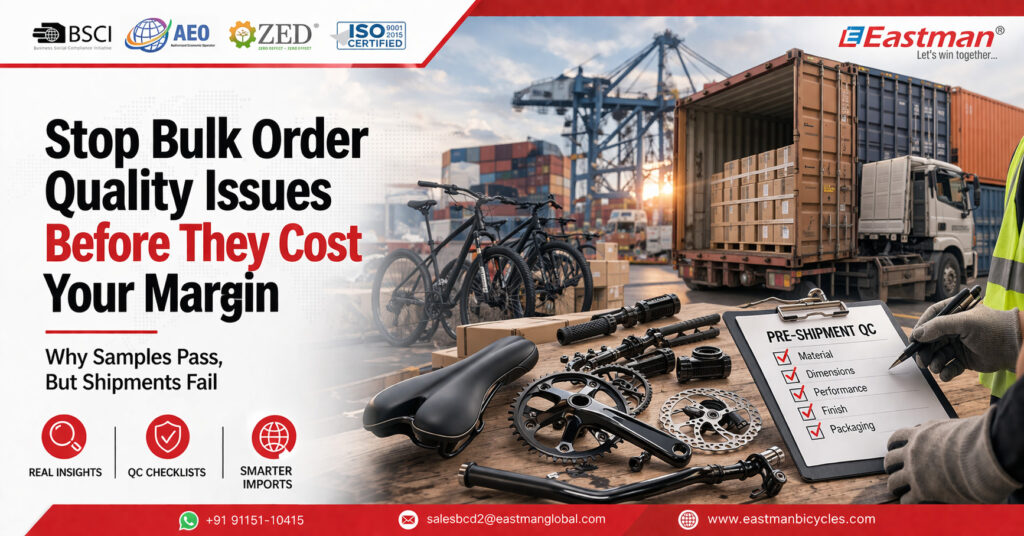
Bicycle parts bulk order quality issues supplier problems happen because samples are controlled, but bulk production is not. Suppliers optimize for cost during production unless strict QC systems are enforced. Without inspection, defined specifications, and supplier accountability, defects are predictable—not accidental. 1. The Shipment That Destroyed Margin A distributor in Mexico approved a perfect sample. They confirmed the order. When the shipment arrived: Supplier response:“Production variation is normal.” That one shipment wiped out their quarterly margin. This is the real risk behindsample vs bulk quality difference in bicycle parts. 2. Bicycle Parts Bulk Order Quality Issues Supplier – Why It Happens This is not bad luck. It is a system issue. The Real Problem During bulk production: 👉 Result: inconsistency is built into the process. 3. Sample vs Bulk Quality Difference in Bicycle Parts Explained Why Samples Mislead Importers Samples are: Bulk production is different: Comparison Table Factor Sample Bulk Production Material Best batch Mixed batches QC Level High Reduced Process Controlled Scaled Output Perfect Variable 👉 This explains why bulk order quality differs in bicycle imports 4. 7 Hidden Quality Traps in Bicycle Imports Business Impact Table Issue What Happens Impact Sample mismatch Bulk differs Returns + trust loss No inspection Defects shipped Full container risk Material change Lower durability Warranty claims Overproduction Rushed output High defect rate 5. Business Impact: Where You Actually Lose Money Financial Loss Operational Loss Real Case A Chile importer received defective cranksets. They liquidated stock →18% margin loss on entire shipment 6. Importer Mistakes That Cause Bulk Quality Failure Most failures are predictable. Common mistakes: 👉 These decisions shift risk to you. 7. How to Ensure Consistent Quality in Bicycle Imports Step 1 – Define Quality Specifications Do not say “good quality” Define: Step 2 – Conduct Pre-Shipment Inspection 👉 This is your final control point. Step 3 – Create a Quality Agreement Include: Step 4 – Audit Supplier Verify: Step 5 – Monitor Production 8. Bicycle Parts QC Checklist Before Shipment 👉 If one fails → stop shipment 9. Supplier Reality (Critical Insight) Suppliers are not quality-driven. They are margin-driven. They balance: 👉 If you don’t control the system,they optimize for their margin—not yours. 10. How to Choose a Reliable Bicycle Parts Supplier Choose suppliers who: Avoid suppliers who: 11. What Reliable Suppliers Do Differently 👉 This is not premium. This is baseline. 🔑 Key Takeaways 🧠 Expert Insight ❓ FAQ Why bulk differs from sample?Because bulk production varies in materials, labor, and QC. How to ensure supplier quality?Use inspection, audits, and strict specifications. What is pre-shipment inspection?A QC check before goods leave factory. How to avoid defects?Control production process—not just sample. How to choose supplier?Evaluate systems, not just price. If you are facing: You don’t need cheaper pricing. You need controlled sourcing. 👉 Work with a supplier who provides: Talk to our export teamorRequest a sample with inspection report
Import problems after delivery: 7 Critical Risks
1. A Shipment That Looked Perfect… Until It Didn’t The container arrived at the port in Chile—on paper, everything was perfect. Invoices matched. Packing lists were clean. The supplier confirmed dispatch weeks ago. But when the distributor opened the container, reality hit hard: What started as a profitable import quickly turned into import problems after delivery—costing time, money, and trust. For many Latin American importers, this isn’t a rare event. It’s a recurring operational risk. 2. The Hidden Problem Behind Bicycle Imports Most importers focus heavily on price and shipping timelines. But the real risk lies after the shipment arrives. Common issues include: In regions like Mexico, Chile, and Colombia, these issues are amplified by: Longer transit times increase the probability of handling damage, moisture exposure, and documentation errors. 3. Why These Issues Keep Happening in Latin America The root causes are rarely accidental. They are systemic. 1. Port Congestion & Handling Risks Latin American ports often face congestion, increasing container handling frequency—raising damage probability. 2. Extended Transit Time Typical transit time India to LATAM ranges from 35 to 60 days. For Chile specifically: Long durations increase exposure to: 3. Supplier Inconsistency Not all suppliers maintain strict QC protocols across bulk orders. What you approved in samples may not match final shipment consistency. 4. Real Case: India → Chile Shipment Breakdown A mid-sized importer in Chile ordered mixed bicycle components: Shipment timeline: Problems faced: Despite pre-shipment approval, post shipment quality issues created: This is a textbook example of poor import risk management bicycle strategy. 5. How to Prevent Post-Shipment Problems To reduce import problems after delivery, you need structured control—not just trust. 1. Enforce Multi-Level Quality Checks 2. Demand Export-Grade Packaging 3. Use Clear Packing Standardization Avoid missing parts shipment import by: 4. Align Logistics with Product Sensitivity Not all bicycle parts are equal: 5. Build Supplier Accountability Work only with exporters who: 6. Exporter Insight from the Ground Experienced exporters understand that shipment success isn’t defined at dispatch—but at delivery. Companies like Eastman Industries Limited bring structured export systems developed over 50+ years of global trade. With exports across multiple continents, such manufacturers focus on: This level of discipline significantly reduces bicycle shipment damage issues and post-delivery surprises. 7. Why This Matters for Your Margins Every unresolved issue after delivery impacts: Even a 5–10% defect or shortage rate can eliminate your entire margin. For LATAM importers, where logistics costs are already high, poor import risk management bicycle can turn profitable deals into losses. 8. Conclusion In international bicycle trade, the biggest risks are not in negotiation—but in execution. import problems after delivery are predictable—and preventable. The difference lies in: If you treat post-shipment risk as a strategic priority, not an afterthought, you protect both your margins and your market credibility. FAQs: Frequently Asked Questions What causes import problems after delivery? Common causes include poor packaging, inconsistent quality control, and long transit times that expose goods to damage. ¿Por qué hay retrasos en envíos a Latinoamérica? Debido a congestión portuaria, procesos aduaneros y rutas logísticas largas desde Asia. How to avoid bicycle shipment damage issues? Use reinforced packaging, moisture protection, and conduct multi-stage quality inspections before dispatch. ¿Qué hacer si faltan piezas en un envío? Revisar listas de empaque detalladas y trabajar con proveedores que usen sistemas de trazabilidad por SKU. What is the transit time India to LATAM? Typically between 35 to 60 days depending on destination and shipping route.
Export Documents Bicycle Shipment: 7 Critical Mistakes
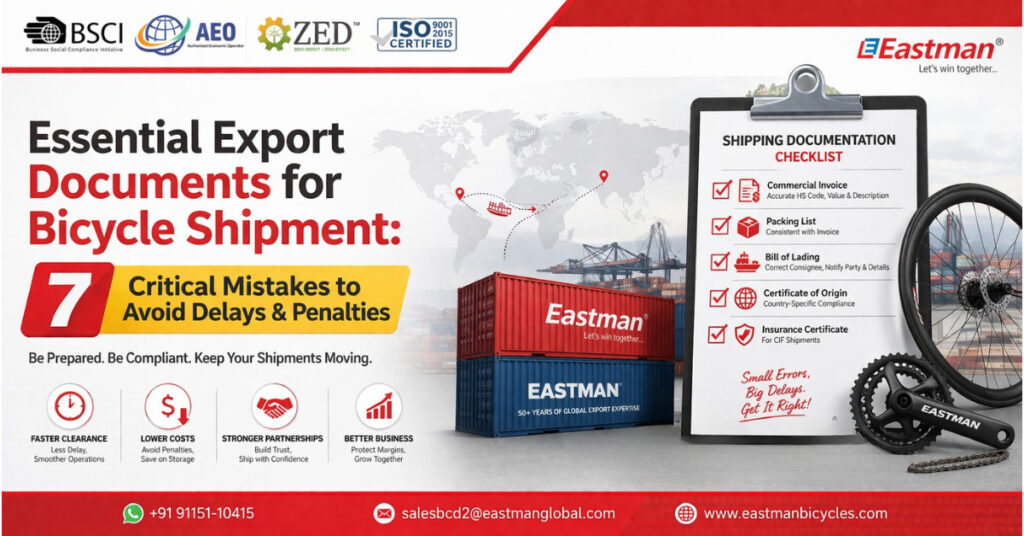
Hook: When One Document Delays an Entire Shipment In late Q3, a distributor in Chile was expecting a container of bicycle parts—frames, pedals, and accessories—from India. Everything was on schedule. The vessel arrived on time. But the cargo didn’t move. Why? A minor bill of lading error—just a mismatch in consignee details. The result? For LATAM buyers, this isn’t rare—it’s operational risk. And most of the time, the issue is not logistics. It’s export documents bicycle shipment errors. The Growing Problem of Shipping Delays in Latin America If you’re importing into Mexico, Chile, Colombia, or Peru, you’ve already faced: According to the World Bank, Latin America consistently ranks lower in logistics performance compared to Asia and Europe. Even a perfectly shipped container can get stuck due to incomplete or incorrect paperwork. Root Causes Behind Export Documentation Errors Let’s break down the most common reasons behind import export paperwork mistakes: 1. Inconsistent Documentation Across Files Mismatch between: Even small inconsistencies trigger customs inspections. 2. Bill of Lading Errors A critical issue in bicycle shipments: These bill of lading errors can stop clearance completely. 3. Poor Understanding of LATAM Customs Requirements Each country has different compliance rules: 4. Lack of Standardized Shipping Documentation Checklist Many suppliers still rely on manual processes—leading to missing or outdated paperwork. Real Scenario: India to Chile Shipment Breakdown Let’s consider a typical shipment: Expected Timeline: But in reality: A missing HS code clarification caused customs to hold the shipment. Actual Outcome: This directly impacts planning for retailers relying on tiempo envío India Chile consistency. Solutions: A Practical Shipping Documentation Checklist To avoid costly delays, here’s a shipping documentation checklist every LATAM importer should demand: Mandatory Export Documents: Best Practices: Exporter Insight: What Experienced Suppliers Do Differently Established exporters like Eastman Industries Limited follow a fundamentally different approach: This is why experienced exporters rarely face customs clearance bicycle export delays. The difference isn’t just manufacturing—it’s process discipline. Product Integration: Why This Matters for Bicycle Components Whether you’re importing: Even a small documentation issue can delay entire SKUs, affecting: Documentation accuracy becomes as critical as product quality. Why Documentation Accuracy Directly Impacts Your Margins Let’s quantify the risk: Issue Impact Documentation error 7–15 days delay Port storage charges +$50–$150/day Lost sales window High seasonal loss Additionally, UN trade reports show that inefficient trade documentation increases total landed cost significantly. For LATAM buyers, this means: Your real cost is not just product price—it’s reliability. Conclusion In global bicycle trade, delays are not always caused by distance—they’re caused by documentation gaps. For LATAM importers, the smartest move is not just negotiating better prices—but working with exporters who understand: Because in the end: The shipment that clears fastest is the one that’s documented best. FAQs: Frequently Asked Questions 1. What causes shipping delays in Latin America? Delays are usually caused by customs clearance issues, port congestion, and incorrect documentation rather than shipping time itself. 2. ¿Por qué hay retrasos en envíos a Latinoamérica? Principalmente por errores en documentos, inspecciones aduaneras y congestión portuaria en países como Chile y Brasil. 3. What are common bill of lading errors in bicycle shipments? Incorrect consignee details, wrong HS codes, and missing notify party information are the most common issues. 4. ¿Qué documentos se necesitan para exportar bicicletas? Factura comercial, lista de empaque, conocimiento de embarque, certificado de origen y seguro (si aplica). 5. How to avoid customs clearance delays in bicycle export? Use a standardized checklist, verify documents before shipment, and work with experienced exporters.
First import order checklist bicycle export India: 7 Costly Mistakes to Avoid
Hook: The First Import That Went Wrong It started like many first deals. A distributor in Chile placed his first import order checklist bicycle export India—excited about margins, confident in pricing, and eager to scale. But 60 days later, reality hit. The shipment was delayed. Costs increased. Payment terms created pressure. And the supplier? Not as reliable as expected. This is the hidden risk behind every first import order checklist bicycle export India—especially for LATAM buyers navigating global sourcing for the first time. The Real Problem: Delays & Cost Surprises If you’re importing into Latin America, you already know the pain points: These delays don’t just slow shipments—they disrupt dealer networks, cash flow, and customer trust. According to the(World Bank Logistics Performance Index),LATAM countries still face infrastructure and customs efficiency gaps compared to Asia. Root Causes Behind LATAM Import Issues 1. Logistics Bottlenecks Port congestion in Santos (Brazil), Manzanillo (Mexico), or Callao (Peru) often extends lead times unpredictably. 2. Supplier Inconsistency New buyers often choose suppliers based only on price—not reliability. 3. Lack of MOQ Clarity Misunderstanding MOQ bicycle export India leads to: 4. Payment Term Confusion Poorly structured supplier terms and payment import agreements can lock your capital unnecessarily. Real Scenario: India → Chile Shipment Breakdown A real-world example: Expected: Actual: Why? The importer had no buffer planning—and paid the price in delayed distribution. First Import Order Checklist (Actionable Guide) Here is a practical first import order checklist bicycle export India you should follow: 1. Confirm MOQ Before Negotiation Understand: 2. Lock Pricing Structure Clarify: 3. Define Quality Standards Always request: 4. Negotiate Payment Terms Smartly Best practices: 5. Plan Logistics Realistically Factor: 6. Build Buffer Time Add: Exporter Insight: What Experienced Suppliers Do Differently Companies like Eastman Industries Limited bring a different approach. With over 50 years of export experience: This is not about selling—it’s about reducing uncertainty for importers. Where Bicycle Parts Fit Into This Strategy For LATAM buyers sourcing: The key is consistency. A strong bicycle sourcing checklist ensures: Without this, scaling your distribution becomes risky. Why This Matters for Your Margins Every delay or mistake impacts: Even a 15-day delay can: inefficiencies in global trade logistics can reduce profitability by up to 20% in developing regions. Conclusion Your first import defines your long-term success. A structured first import order checklist bicycle export India is not optional—it’s your risk management tool. For LATAM buyers, the difference between profit and loss often comes down to: Import smart—not just cheap. FAQs: Frequently Asked Questions What causes shipping delays in Latin America? Port congestion, customs inefficiencies, and limited infrastructure are key reasons behind shipping delays Latin America. ¿Por qué hay retrasos en envíos a Latinoamérica? Los retrasos ocurren por congestión portuaria, procesos aduaneros lentos y limitaciones logísticas en la región. What is the average transit time from India to LATAM? Typical transit time India to LATAM ranges between 30–45 days but can extend to 60+ days during peak seasons. ¿Cuál es el tiempo envío India Chile? El tiempo envío India Chile suele ser de 35–50 días, dependiendo del puerto y condiciones logísticas. What is MOQ in bicycle export from India? MOQ bicycle export India refers to the minimum quantity required per product or order, often optimized for container shipping.
Cheap vs quality suppliers bicycle: What LATAM Importers Must Know Before Ordering
Table of Contents 1. A Shipment That Changed Everything A distributor in Chile once chose a low-cost supplier to improve margins. The numbers looked perfect on paper. But within 60 days, problems surfaced—defective pedals, inconsistent finishing, and delayed shipments. What started as a cost-saving decision turned into a reputational risk. This is where the debate of cheap vs quality suppliers bicycle becomes real—not theoretical. 2. The Real Problem Behind Supplier Decisions Across Mexico, Peru, and Colombia, importers face a constant balancing act: Add to that shipping delays Latin America and frequent retrasos envíos Latinoamérica, and the cost equation changes entirely. What looks cheap upfront often becomes expensive later. 3. Why Cheap vs Quality Suppliers Bicycle Choices Go Wrong Hidden Risks Behind Low Price Suppliers Many LATAM buyers focus on unit price—but overlook: These factors directly affect bicycle import quality issues. Logistics Compounds the Problem Even if the price is low: According to global logistics benchmarks, inefficiencies in supply chains can significantly increase total landed cost. 4. Real Scenario: India to Chile Shipment Breakdown A mid-sized importer switched from a cheaper supplier to a structured exporter. Before: After switching: The key difference? Not just price—but process. 5. How to Choose Cheap vs Quality Suppliers Bicycle Without Risk 1. Evaluate Total Cost, Not Unit Price Factor in delays, defects, and replacements. 2. Check Certifications & Standards Reliable suppliers follow international quality norms. 3. Assess Logistics Capability Can they manage transit time India to LATAM efficiently? 4. Look for LATAM Experience Suppliers familiar with Chile, Peru, or Brazil reduce risk. 5. Demand Consistency, Not Just Samples One good sample doesn’t guarantee bulk quality. 6. Exporter Insight: What 50+ Years of Trade Teaches Companies like Eastman Industries Limited have seen this pattern repeatedly. With over five decades of export experience: Global trade data also supports this—structured supply chains outperform low-cost fragmented sourcing. 7. Where Product Quality Meets Logistics When sourcing bicycle components: A reliable supplier ensures: 8. Why It Matters for LATAM Importers Choosing the wrong supplier affects: In Latin America, timing is everything. A delayed or defective shipment doesn’t just hurt margins—it opens doors for competitors. 9. Conclusion: The Real Cost of Cheap The decision between cheap vs quality suppliers bicycle is not about spending more. It’s about avoiding hidden losses. For LATAM importers, success comes from: Because in global trade, the cheapest supplier is rarely the most profitable. Image Placeholders FAQ Section 1. What is the risk of choosing cheap bicycle suppliers? Low-cost suppliers often lead to inconsistent quality, delays, and higher long-term costs. 2. ¿Qué problemas causan los proveedores baratos de bicicletas? Generan retrasos, defectos de calidad y problemas logísticos que afectan el negocio. 3. What is the typical transit time India to LATAM? Usually 35–60 days depending on route and port conditions. 4. ¿Cuál es el tiempo envío India Chile promedio? Entre 40 y 55 días, dependiendo de la logística y congestión portuaria. 5. How to compare bicycle suppliers India vs China? Evaluate quality consistency, logistics support, certifications, and communication—not just price.
Bicycle Shipping Time from India to Latin America: Complete Import Guide (2026)
A Story Most Importers Don’t Expect A distributor in Mexico once told us: “We planned everything. Pricing, marketing, even dealer rollout.Shipping was 45 days — we thought that was safe.” It wasn’t. The container arrived late.Inventory ran out.Competitors filled the gap. And suddenly, shipping time mattered more than price ever did. 2. The Real Problem LATAM Importers Face If you’re importing from India to Latin America, you already know: But the biggest blind spot we keep seeing is: Underestimating bicycle shipping time from India to Latin America Most buyers assume: Reality is different. 3. What Actually Affects Shipping Time? Let’s break down container transit time India to Mexico, Brazil, Chile, and LATAM regions: 1. Port Congestion 2. Transshipment Routes There are rarely direct vessels. Typical route:India → Middle East / Europe → Latin America Adds 7–15 days easily 3. Customs & Documentation Delays Even a small error can cause: Especially common in: 4. Seasonal Pressure Peak periods: Leads to retrasos envíos Latinoamérica So, What Is the Actual Shipping Time? Typical India to Latin America freight time: This is real-world bicycle export shipping duration, not ideal-case estimates. 4. Real Scenario: What Actually Happens One importer in Chile planned based on: tiempo envío India Chile = 50 days But: Result: 5. How Smart Importers Manage This 1. Always Add Buffer Time Plan for:+10 to 15 days over expected transit 2. Split Shipments (If Possible) 3. Work With Experienced Exporters An experienced exporter: 4. Align Orders With Market Demand Don’t order based only on price. Order based on: 6. Exporter Insight (From the Ground) After working across global markets for decades, one pattern is clear: Importers who focus only on price often struggle later. Importers who understand logistics + timing build stable businesses. At Eastman Industries Limited, shipments are not just about dispatch —they are planned around: Because in export, timing is part of quality. 7. Where Products Fit Into This Whether you’re importing: The risk is the same: Late shipment = lost sales Especially for: 8. Why This Matters More Than You Think Many LATAM buyers compare: But they miss: The cost of delay Which includes: Often more expensive than price difference 9. Final Takeaway If you’re importing bicycles from India: Don’t ask only: “What is the price?”Ask: “What is the real delivery timeline?” Because in this business: The right timing can outperform the lowest price. FAQ (Frequently Asked Questions) 1. What is bicycle shipping time from India to Latin America? Typically 40–60 days, depending on destination, route, and port conditions. 2. Why do shipping delays happen in Latin America? Due to port congestion, transshipment routes, customs checks, and seasonal demand spikes. 3. ¿Cuánto tarda un envío de bicicletas desde India a Latinoamérica? Generalmente entre 45 y 60 días, dependiendo del país y posibles retrasos logísticos. 4. How can importers reduce shipping delays? By planning buffer time, working with experienced exporters, and ensuring correct documentation. 5. ¿Por qué ocurren retrasos en envíos en Latinoamérica? Por congestión portuaria, rutas indirectas y procesos aduaneros más lentos. 6. What is the transit time from India to Mexico or Brazil?
OEM Bicycles from India: A Hidden Gem for Distributors Worldwide
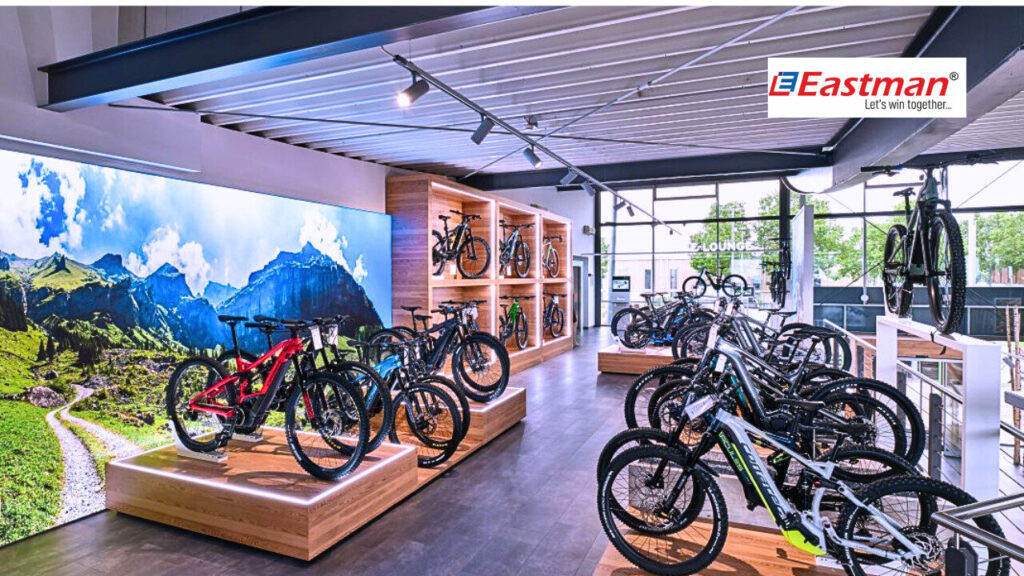
With a rapidly growing global demand for good quality, affordable bicycles, many distributors are seeking the competitive edge by contracting OEMs in India. For a long time, perceived imported cycle brands have held sway in the Indian premium segment; however, Indian OEM bicycle manufacturers are now finding appreciation in the world for innovation, cost-efficiency, and dependability—especially among distributors who look for solutions that can be scaled up or customized. Among some of the more trusted offerings in this space is Eastman, which comes with over forty years of manufacturing experience and a heavy overseas presence. What makes Eastman truly special for International distributors is the way they operate to cater to their unique market needs through complete OEM solutions right through from design-and-engineering to assembly to packaging and logistics. The distributors across Latin America, including wholesale bicycle suppliers in Chile, generally source from India because of paramount flexibility, speed, and cost benefits that Indian OEMs like Eastman can provide. With a strong production setup, Eastman, using the best of technology, produces bicycles that conform to international standards and are affordable for resellers and wholesalers. From simple city urban bikes, hard-core mountain bikes, kids’ bikes, to electric versions—Eastman can deliver them all. These bicycles may be user-branded and equipped with client or region-specific specifications. This sort of flexibility enables distributors to go and develop their own unique line of products under their own label, supported by Eastman’s engineering know-how that spans well over several decades. The Eastman OEM services are rather unique, aligning themselves for the B2B markets in contrast with other imported cycle brands in India, which are mainly set for retail markets. The company supports the distributors not just with products but also with quality assurance, timely deliveries, and constant technical services which help smooth and streamline the whole supply chain. In addition to this, Eastman follows sustainable manufacturing practices, which is in accordance with all the modern-day trends of greener transportation solutions; this gives distributors a competitive edge. To sum up, OEM bicycles from India have yet to be fully explored by the world distributors, offering the perfect amalgamation of quality, customization, and cost-efficiency. Eastman stands as a good example of how India can support global endeavors for bicycle companies. For more information pertaining to OEM opportunities with Eastman and to view the entire catalog of Eastman bicycles.
“The shipment left on time,” they said. What happened next is the real story.
It was a routine shipment—or at least, it was supposed to be. The container was sealed in Ludhiana. Documentation was cleared. The vessel booking was confirmed. The update sent to the buyer in Chile was simple: “Shipment departed on schedule.” For many exporters, that’s the end of the story. But for importers across Latin America—Mexico, Chile, Colombia, Peru, and beyond—that’s where the real story begins. The Reality Behind “On-Time Shipment” If you’ve been importing bicycle parts or components, you already know this: Shipping delays in Latin America are rarely caused at origin. The actual disruption happens after the vessel sails. Let’s break down what we’ve seen over 50+ years of exporting from India to LATAM markets: 1. Port Congestion in Latin America Even when transit time from India to LATAM is calculated at 35–55 days, congestion at ports like: …can add 7–21 days of delay. 2. Customs Clearance Bottlenecks Documentation mismatches, random inspections, or changing import policies can delay cargo unexpectedly. For example: Result: Cargo sits idle while costs increase. 3. Transshipment Risks Many shipments from India to Latin America are not direct. They pass through: Each touchpoint introduces: 4. Inland Logistics Delays Even after port clearance, delays continue: Transit Time India to LATAM: What Importers Expect vs Reality Route Expected Transit Time Realistic Timeline India → Chile 40–45 days 50–65 days India → Colombia 35–40 days 45–60 days India → Mexico 30–35 days 40–55 days India → Peru 38–45 days 50–65 days This is why keywords like “tiempo envío India Chile” and “shipping delays Latin America” are not just search terms—they reflect real operational pain. A Story From Our Experience A distributor in Colombia once told us: “We planned our entire season based on your dispatch date.” The shipment was on time from India. But: Total delay: 28 days The impact? That’s when we realized: Exporting is not about shipping. It’s about controlling uncertainty. What Smart Importers in Latin America Are Doing Differently Over the years, experienced buyers across LATAM have shifted their strategy. 1. Buffer-Based Planning Instead of relying on standard transit time: 2. Mixed Shipment Strategy Rather than one large shipment: This reduces risk exposure. 3. Strong Exporter Coordination They don’t just buy products—they partner with exporters who: How We Handle Shipping Uncertainty at Eastman At Eastman Industries Limited, we’ve built our export system around one principle: Transparency over assumptions. What we do differently: ✔ Pre-dispatch documentation validation✔ HS code accuracy for bicycle parts✔ Route optimization (minimizing transshipment risk)✔ Realistic—not optimistic—delivery timelines✔ Continuous buyer communication Because for us: “Shipment dispatched” is not success.“Shipment delivered as planned” is. Our Product Expertise (Supporting Your Supply Chain) We supply complete bicycle parts and components for bulk importers across Latin America: Designed for: Why This Matters for LATAM Buyers If you’re importing into: Chile, Colombia, Mexico, Peru, Ecuador, Argentina, Brazil, or Central America— Then your biggest risk is not price. 👉 It’s uncertainty in delivery. And that directly affects: The Real Question You Should Ask Your Supplier Not: ❌ “When will you ship?” But: “How do you manage delays after shipment?” Because that’s where most exporters fail—and where experienced partners stand out. FAQs (For Latin American Importers) 1. Why are there frequent shipping delays to Latin America? Due to port congestion, customs clearance issues, transshipment dependencies, and inland logistics challenges. 2. What is the average transit time from India to Chile? Typically 40–45 days, but realistically 50–65 days considering delays. 3. How can I reduce shipping delays risk? 4. Are delays more common for bicycle parts shipments? Not specifically, but incorrect HS codes or documentation errors in components can increase inspection probability. 5. What is the best shipping strategy for LATAM importers? Final Thought The next time someone tells you: “Your shipment has left on time.” Pause for a second. Because the real question is: “What happens next?” Let’s Plan Your Next Shipment the Right Way If you’re importing bicycle parts into Latin America and want predictable supply—not surprises—connect with us:
Last year, a buyer from Chile told us something we still think about…

He didn’t start the conversation with pricing.He didn’t ask about specifications. He said: “We saved on buying cost… but we lost our season.” That line has stayed with us — because we’ve seen it happen across Latin America, from Mexico to Chile to Colombia. This blog is about what really happens behind bicycle parts import decisions — and why many importers underestimate one thing that matters more than price: Landed cost. What Happened to That Chilean Importer Last year, a bicycle parts importer from Chile reached out after facing an issue. On paper, everything looked perfect: But reality played out differently. What went wrong: By the time the goods reached Chile: The result? The “cheaper deal” became more expensive than a higher-priced reliable supplier. The Real Problem: Misunderstanding Landed Cost Most importers in Latin America focus on: “What is the price per unit?” But experienced buyers ask: “What is my final cost when the product is ready to sell?” This is where many importers searching for“bicycle parts import Latin America” or“importar repuestos bicicleta”make a critical mistake. What is Landed Cost in Bicycle Parts Import? Landed cost is not just product price. It includes: This is your real profitability number Why This Matters More in Latin America Import conditions in LATAM are unique: 1. Longer Transit Times India → Chile / Mexico / Colombia often takes 30–60+ days 2. Customs Complexity Documentation errors or delays can extend clearance timelines 3. Seasonal Demand Sensitivity Miss timing → lose market opportunity 4. Currency Fluctuation Risk A small change can affect costo importación LATAM The Difference Between Cheap and Profitable Let’s break it down simply: Factor Cheap Supplier Reliable Export Partner Price Lower Slightly higher Delivery Uncertain Predictable Quality Inconsistent Standardized Support Minimal Active Outcome Risk Stability Smart importers don’t chase low priceThey optimize total outcome What Experienced Importers Do Differently Across Latin America, the most successful distributors follow a different approach: They Evaluate Beyond Price They consider: They Plan for Reality, Not Promises Instead of trusting: “Shipment will arrive in 45 days” They plan for: “What if it takes 60 days?” They Build Long-Term Supplier Relationships They avoid: How We Support Latin American Importers At Eastman Industries Limited, we’ve worked with importers across Latin America for decades. We understand: What We Focus On Instead of just selling products, we focus on: Consistency in Supply Uniform quality across bulk shipments Export-Ready Packaging Designed for long-distance shipping Documentation Accuracy Reducing customs-related delays Communication Transparency Clear timelines, realistic commitments Bicycle Parts We Export We supply a wide range of components for bulk importers: A Simple Question Every Importer Should Ask Before confirming your next order, ask: “Am I optimizing price… or profit?” Because those are not the same. Final Thought That Chilean importer didn’t make a mistake because of lack of experience. He made it because the deal looked profitable — until reality showed up. And in international trade, especially in Latin America: What looks cheap is not always profitableWhat is reliable is often more valuable Frequently Asked Questions (FAQ) 1. What is the biggest mistake in bicycle parts import in Latin America? Focusing only on product price instead of total landed cost, including logistics, delays, and quality risks. 2. How can importers reduce risk when sourcing from India? By working with experienced exporters, verifying bulk consistency, and ensuring proper documentation and packaging standards. 3. What is typical transit time from India to Latin America? Usually between 30 to 60 days, depending on destination and shipping conditions. 4. Why is bulk quality different from samples? Samples are often hand-picked, while bulk production depends on process consistency. Reliable Bicycle parts exporters ensure standardization. 5. How can I calculate landed cost for bicycle parts? Include product cost, freight, duties, inland transport, risk factor, and potential delay impact.
MOQ Misunderstandings: The Silent Risk in Bicycle Parts Sourcing
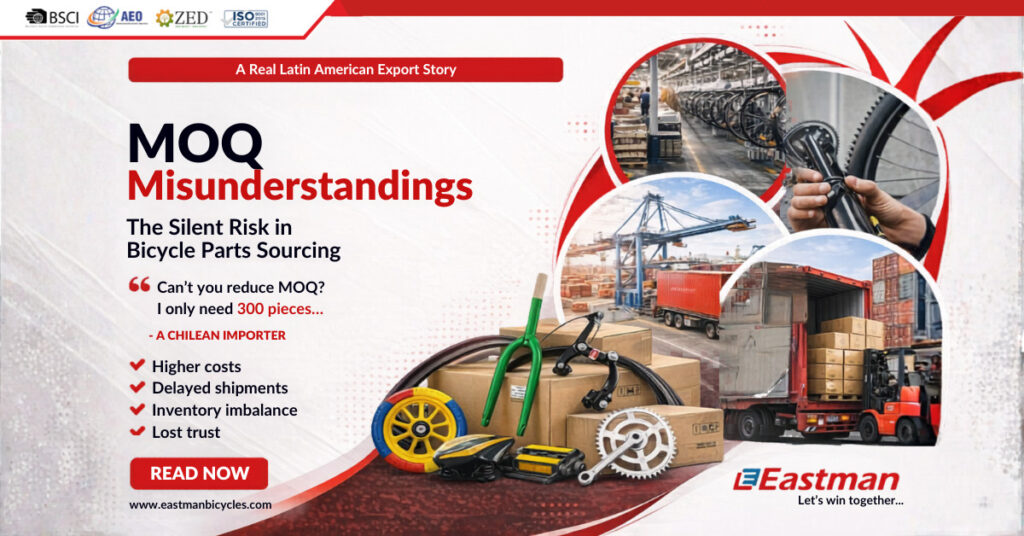
By Latin American Export Marketing Specialist A Conversation That Happens Too Often A few months ago, I was on a call with an importer from Chile. He was experienced. Smart. Knew his market well But he asked me a question I’ve heard many times in my export journey: “Raj, can you reduce MOQ? I only need 300 pieces for now.” We were discussing brake sets. The MOQ was 1,000 units. I paused—not because the question was unusual, but because I knew what was coming next. If not handled properly, this small misunderstanding could lead to: And most importantly—lost trust between buyer and exporter. This is why I’m writing this. MOQ is not just a number.It’s one of the most misunderstood parts of bicycle parts sourcing. What MOQ Really Means (From an Exporter’s Perspective) Let me explain this in simple terms. MOQ (Minimum Order Quantity) is not something exporters randomly decide. It comes from: For example: If we produce freewheels, the machines are set up for a batch. Running that machine for 300 pieces vs 1,000 pieces: So when MOQ is set, it is actually the minimum efficient production level. Where Importers Get It Wrong Over the years, working with buyers across Mexico, Colombia, Peru, and Brazil, I’ve seen a pattern. MOQ misunderstandings usually fall into these categories: 1. “MOQ is Just a Starting Point for Negotiation” Many buyers believe MOQ is flexible like pricing. Yes, we can sometimes adjust—but not always. When MOQ is pushed too low: 2. “I’ll Order Small First, Then Increase Later” This sounds logical. But in reality: 3. “I Can Mix Anything to Meet MOQ” This is another common misunderstanding. Buyers often say: “Can I take 100 chains, 100 pedals, 100 saddles?” But MOQ is usually: Not all items can be mixed easily. 4. Ignoring Packaging Reality One importer from Peru once confirmed an order below MOQ. Later we faced an issue: MOQ is also linked to: How MOQ Mistakes Actually Hurt Your Business Let me share what happens behind the scenes. 1. Your Cost Quietly Increases You think you saved money by ordering less. But: 2. Your Inventory Becomes Unbalanced I’ve seen importers in Central America: All because MOQ planning was not aligned with demand. 3. You Miss Your Selling Season This is the most painful one. A buyer in Colombia once delayed order finalization due to MOQ negotiation. By the time production started: And in bicycle business, timing is everything. 4. Your Cash Flow Gets Blocked On the other side: Ordering without MOQ planning can also lead to: MOQ and Container Reality (This Is Where Most People Fail) Here’s something I always tell my buyers: “MOQ should match your container—not just your requirement.” Let’s say: What happens? This is where smart importers win. They don’t just think: They think: What Smart Latin American Importers Do Differently After working with serious buyers across Latin America, I’ve noticed clear patterns. 1. They Plan Based on Sales, Not Assumptions They ask: 2. They Don’t Chase Too Many SKUs Instead of ordering 20 different models: They focus on: This makes MOQ easier to manage. 3. They Use Combination Strategy They balance orders like this: This creates a well-optimized shipment. 4. They Ask Better Questions Instead of asking: “Can you reduce MOQ?” They ask: This changes the entire conversation. Where MOQ Matters Most in Bicycle Parts From my experience, here’s how MOQ typically behaves: High MOQ Products These require: Medium MOQ Products These are more flexible—but still structured. Low MOQ Products These are useful for balancing your shipment. How We Approach MOQ at Eastman Industries Limited At Eastman, we’ve been exporting bicycle parts globally for over 50 years. Our experience has taught us one thing: Every market is different. Especially Latin America. We don’t treat MOQ as a rigid number. We look at: Our Strength as an Export Partner Product Range We Handle We export a wide range of bicycle parts, including: A Simple Rule I Always Share If you remember only one thing from this article, remember this: MOQ is not a restriction. It is a planning tool. When you understand it properly: Final Thoughts MOQ misunderstandings don’t create problems immediately. They create slow damage: But the good news is: Once you understand how MOQ works, you gain a strong advantage over your competitors. FAQ Section 1. Can MOQ be reduced for first orders? Sometimes yes, but it depends on the product and production setup. Lower MOQ may increase cost per unit. 2. Why do suppliers insist on MOQ? MOQ ensures efficient production, cost control, and consistent quality. 3. Can I mix different bicycle parts to meet MOQ? In some cases yes, but not all products can be combined due to production and packaging limitations. 4. Which bicycle parts have the highest MOQ? Frame sets, forks, and rims usually have higher MOQ due to manufacturing complexity. 5. How can I manage MOQ with limited budget? Focus on fewer SKUs, prioritize fast-moving products, and optimize container loading. 6. Does MOQ affect shipping cost? Yes. Poor MOQ planning can lead to underutilized containers, increasing per-unit shipping cost.
Shipment Delays Destroy Margins Faster Than Pricing Differences
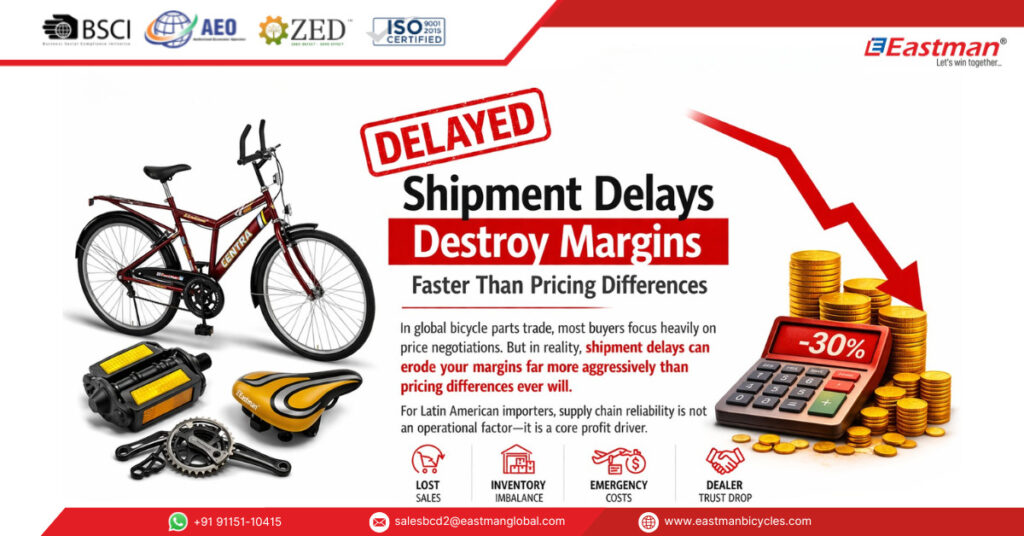
In global bicycle parts trade, most buyers focus heavily on price negotiations. A few cents saved per unit often feels like a win. But in reality, that’s rarely where profits are won or lost. Shipment delays can erode your margins far more aggressively than pricing differences ever will. In our experience working with international buyers, we’ve seen importers lose entire seasonal sales—not because of pricing—but because shipments arrived 20–30 days late. For bicycle parts importers, distributors, and OEM assemblers across Latin America, supply chain reliability is not just an operational factor—it is a core profit driver. The Hidden Cost of Shipment Delays When a shipment is delayed, the impact is rarely isolated. It creates a cascading effect across your entire business. 1. Lost Sales Opportunities If your stock of fast-moving products like freewheels, chains, brake sets, and pedals runs out during peak demand, you don’t just delay revenue—you lose customers. Dealers and retailers will switch to competitors who can supply immediately. Sounds small? It’s not. This is where many importers quietly lose market share. 2. Inventory Imbalance Delayed shipments create two major risks: This imbalance disrupts your working capital cycle and reduces overall efficiency. 3. Emergency Procurement at Higher Costs When shipments don’t arrive on time, buyers are forced to react quickly: We’ve seen cases where a buyer saved a few cents per unit initially—but ended up increasing total costs by over 30% due to emergency decisions. 4. Dealer & Distributor Friction Your downstream network expects consistency. If you fail to supply: In B2B markets, reliability builds relationships far more than price ever will. Price vs. Delivery: A Real Margin Comparison Let’s break it down with a simple scenario: Scenario A: Cheaper Supplier (Unreliable Delivery) Result: Scenario B: Slightly Higher Price (Reliable Supply Partner) Result: Conclusion The second option often generates significantly higher net profit—despite a higher unit price. Because in real business, continuity beats cost savings. Why Shipment Delays Happen in Bicycle Parts Trade Understanding the root causes helps importers make better sourcing decisions. Common Reasons: The key issue is rarely external factors alone—it’s the supplier’s ability to manage exports professionally. What Reliable Export Partners Do Differently Professional export-oriented suppliers understand that international buyers value predictability over promises. Here’s what sets them apart: 1. Realistic Order Commitments They don’t overpromise. They commit only to timelines they can actually deliver. 2. Strong Supply Chain Coordination Reliable exporters ensure alignment between: 3. Export Process Expertise Experienced export partners: 4. Consistent Multi-Market Supply Exporters already supplying multiple countries are better equipped to handle: Why Latin American Importers Must Prioritize Delivery Reliability Markets like Mexico, Chile, Colombia, Peru, and Brazil come with added complexity: Because of this, even a small delay at the supplier level gets amplified across the entire supply chain. That’s why choosing the right export partner is critical. Strategic Shift: From Price Buying to Risk-Based Buying Smart importers are changing how they evaluate suppliers. Instead of asking: “Who is the cheapest supplier?” They now ask: “Who can consistently deliver without disruption?” This shift leads to: A Practical Perspective for Importers Suppliers with strong export systems, consistent shipment history, and structured processes usually deliver better long-term results. Importers who focus only on price often face: On the other hand, those who prioritize reliability build: Final Takeaway In international bicycle parts trade: Margins are not lost in negotiation tables. They are lost in delayed shipments. Choosing a slightly higher-priced but reliable export partner is not a cost—it is a strategic decision that protects: Author Raj BahadurB2B Export Digital Marketing SpecialistEastman Industries Limited Frequently Asked Questions (FAQs) 1. Why are shipment delays more damaging than price differences? Because delays directly impact sales, inventory flow, and customer relationships, while price differences are usually small and predictable. 2. How can I identify a reliable bicycle parts export supplier? Look for: 3. What is the typical lead time for bicycle parts imports? Generally: 4. Should I always choose higher-priced suppliers? Not always. But if a slightly higher price ensures reliable delivery, it usually leads to better overall profitability. 5. How can importers reduce supply chain risks?
How Chile’s Top Bicycle Manufacturers are Shaping Latin America’s Cycling Trends
Latin America is undergoing a significant shift in urban mobility, driven by the growing prevalence of environmental awareness and health-promoting lifestyles. At the vanguard of this movement flies Chile, where the premier bicycle manufacturers are making a major impact not only domestically but all over the continent. Companies such as Eastman Bicycles—synonymous with quality and innovation—are shaping regional trends in cycling preferences and infrastructure, thereby elevating Chile to the status of a bicycle powerhouse. The Rise of Eco-Friendly Transport Globally, the bicycle industry is having its green revolution. The shift toward smart cities and carbon-neutral modes of transportation is well taught in papers such as those by Market Prospects, where the bicycle demand was viewed as a rapidly increasing factor, mainly for electric and hybrid bicycles. The bicycle industry in Chile has not taken these changes lightly. The leading bicycle manufacturers in Chile consider their interesting clientele and are offering state-of-the-art materials, ergonomic designs, and sustainable manufacturing processes in their product line. Cycling infrastructure is a crucial element cities such as Santiago and Valparaíso have promoted. There have been bike-sharing programs and subsidies in favor of adopting two-wheeled transport. Manufacturers are all into making models for urban commuters, adventure cyclists, and environmentally conscious consumers. Adventure-Ready Innovation From adventures highlighted by Skedaddle, Chile’s varied landscape – from the Atacama Desert to the Andes – has created demands for sports-performance bicycles. To fulfill this need, bicycle manufacturers such as Eastman Bicycles provide a mixture of technical skills in providing a highly versatile and durable bicycle that can handle both on-road and off-road scenarios. These bicycles would serve well in support of Latin American adventure tourism, providing a good quality bicycle capable of dealing with diversified geography. Chile and Regional Integration of the Bicycle Industry The Chilean bicycle industry is operating in a complementary manner with others. The major bicycle makers of Chile export not just products but also innovation and sustainability throughout Latin America. Eastman Bicycles, for instance, is a leading bicycle exporter from India and is establishing an increasing manufacturing presence in Latin America. Their hybrid business model thus enables them to produce globally competitive bicycles that are affordable and tough at the same time. Furthermore, there is a mutual influence between other South American manufacturers and regional impact on cycling industries. Bicycle exports from Brazil have emerged as a top competitor in the region along with Peru. Chilean manufacturers distinguish themselves by balancing high production standards with better infrastructural distribution networks and capacity for innovative design. Incorporates into Future-Time Proposition Chile cannot be excluded from the Latin American future of cycling. Following world trends as identified by major industry forecasts and capitalizing on the culture’s love for cycling in Latin America, the country’s best manufacturers are leading the market toward smart and environmentally friendly transport solutions. Brands like Eastman Bicycles are a testimony to these frontiers, their operations dedicated to excellence, sustainability, and regional integration. Whether Eastman is exporting bicycles from India or making specialized bikes for the Latin American terrain, Eastman has continually raised the bar in production standards. With the continued development of infrastructure, growing consumer awareness, and policy support, Chile is set to lead Latin America along a new path of sustainability-orientated tourism and sports biking.
Eastman Bicycles: India’s Leading Cycle Manufacturer Powering Rides Worldwide
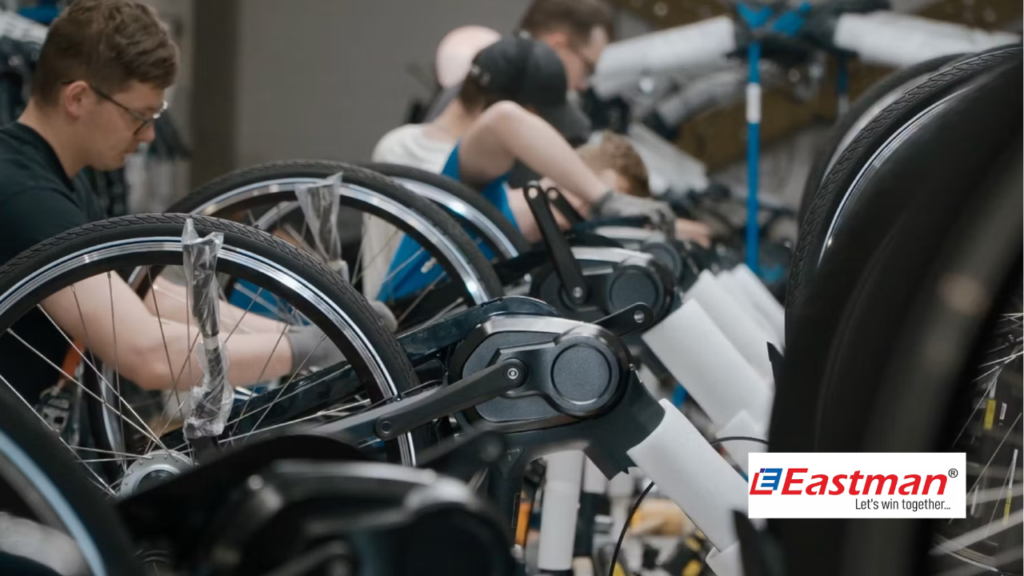
The bicycle market in India is one of the most extensive, both in terms of demand and production. With the rise of cycling as a healthy and environmentally friendly method of transportation, bicycle manufacturing in India has been increasing steadily. Among the giants, Eastman Bicycles has emerged as the largest cycle manufacturer in India, putting forth world-class bicycles for both the national and international markets. A Legacy of Quality and Innovation Eastman Bicycles is world-renowned through the Eastman Group. Throughout the years, this brand has associated itself with notions of quality, innovation, and customer satisfaction. Established under the ambit of companies producing durable and high-performance bicycles, the Eastman brand has developed into an international one and now exports to over 100 countries. Eastman Bicycles, with its advanced R&D capabilities and facilities that utilise automation and technologies, can produce almost every type of bicycle including mountain bikes, city bikes, and kids’ bikes. We manufacture every bike with precision and the highest quality standards, while observing ISO 9001:2015 and CE certifications in this process. Millions of People Worldwide Trust Them The company is capable of meeting the highest standards of quality, comfort, and durability because Eastman bicycles are manufactured using an integrated process – from frame building, painting, and assembly to more rigorous quality checks – using the finest of materials and components. Their global presence and worldwide quality control system have made them a trusted brand in developing and developed countries. Eastman bicycles are a wonderful option tailor-made for all riders, with the categories being meant for fitness, commuting, recreation, among others. Commitment to Sustainability Being a responsible manufacturer, Eastman Bicycles put major emphasis on environmental issues. The company operates on environmentally safe procedures throughout their production and actively promotes cycling as a green alternative to motorised transport. Why Eastman Bicycles? · More than 40 years of manufacturing history · Export to more than 100 countries around the globe · Certified and state-of-the-art technology · Variety of products for different ages and terrains · Emphasis given to customer satisfaction and after-sales service Conclusion: India’s largest bicycle manufacturer-Easman Bicycles still retains the doctrine of innovation, quality, and global trust. Whether you’re a beginner in riding or a serious one, Eastman brings precisely the right bike into your life journey. Know more at Eastman Bicycles and bid adieu by choosing your dream bike now.